Claude Debussy's Syrinx for solo flute portrays the Greek god Pan's longing and sorrow after the nymph Syrinx transforms into reeds, with the melody expressing his unrequited love and loneliness.
Composition History
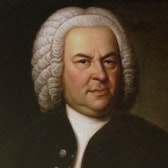
Johann Sebastian Bach likely composed his orchestral suites, including the one featuring the Badinerie, during his final years in Köthen, a period that also produced the Brandenburg Concertos and cello suites.
Compositional Technique
Erik Satie's music, exemplified by his Gymnopédie No. 1, is characterized by repetitive aspects, often vertical accompaniment, and a constant pursuit of simplification, aiming for 'clear, pure lines.'
Historical Context
The rise of the middle class in the 18th century led to a shift in audience preference from harmonic complexity to melodic beauty, sparking a debate among musicians and philosophers.
Composer Biography
Johann Heinrich Freytag, a flautist and court servant in Köthen, was likely the dedicatee of all of J.S. Bach's surviving flute works, including the virtuosic Badinerie.
Composer Biography
Nikolay Rimsky-Korsakov's virtuosity in orchestral composition, as seen in 'Flight of the Bumble-Bee,' stemmed from his experience as Inspector of Naval Bands, where he learned to play every instrument.
Cultural Impact
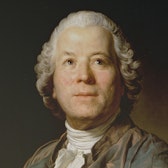
Charles Gounod's famous Ave Maria, originally titled 'Meditation on a Bach Prelude,' was not composed by him but improvised over a J.S. Bach prelude and later notated by his future father-in-law.