Stanford believed that the theatrical arm movements of Franz Liszt, a renowned pianist, were merely for show and that Liszt played for musicians with "immovable body and a quiet repressed dignity."
Historical Context
Stanford's Twenty-Four Preludes in all the keys, completed in 1918, were among the first such cycles by a British composer, appearing at a time when some continental composers were abandoning tonality.
Composition History
Stanford's piano music output was not evenly spaced; after an initial period, he wrote very little until the early 20th century, often focusing on larger choral works.
Compositional Technique
Many of Stanford's later Preludes, such as those in op.163 and op.179, are "piano-driven," meaning their poetic ideas derive from exploiting specific pianistic devices or technical problems.
Composer Biography
As a child, Charles Villiers Stanford was praised for his piano playing, with one critic noting he played "with his head as well as with his hands."
Recording & Production
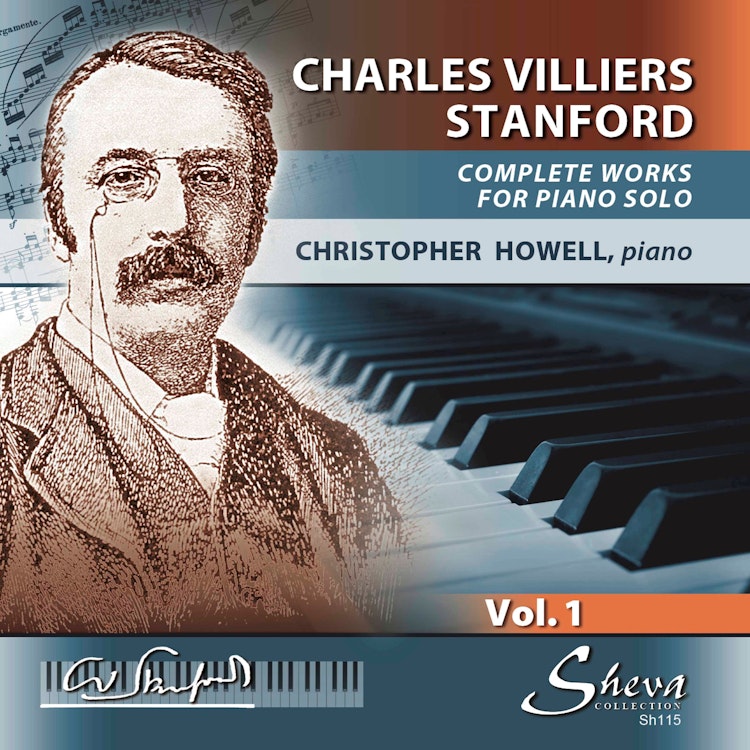
This album features Christopher Howell playing an Imperial Bösendorfer piano, recorded in Milan, Italy.
Composer's Artistic Vision
Stanford preferred a piano touch that emphasized "beauty of tone to strength of muscle," a philosophy he learned from his godmother, Elizabeth Meeke, a pupil of Ignaz Moscheles.
You might also enjoy...
Piano
American Visions
Sibelius Piano Works
Piano Dance: A 20th-Century Portrait
Dmitri Shostakovich - 24 Preludes and Fugues for Piano, Op. 87
Wizard of the Keyboard
Lutosławski: Complete Piano Music
2025 Cliburn Competition: Carter Johnson – Preliminary Round (Live)
By the Waters of Memory
Misha Dichter - The Complete RCA Victor Recordings
Lux aeterna: Visions of Bach
Johannes Brahms: Piano Sonatas Nos. 1 & 2, Variations on a Hungarian Song & Klavierstücke