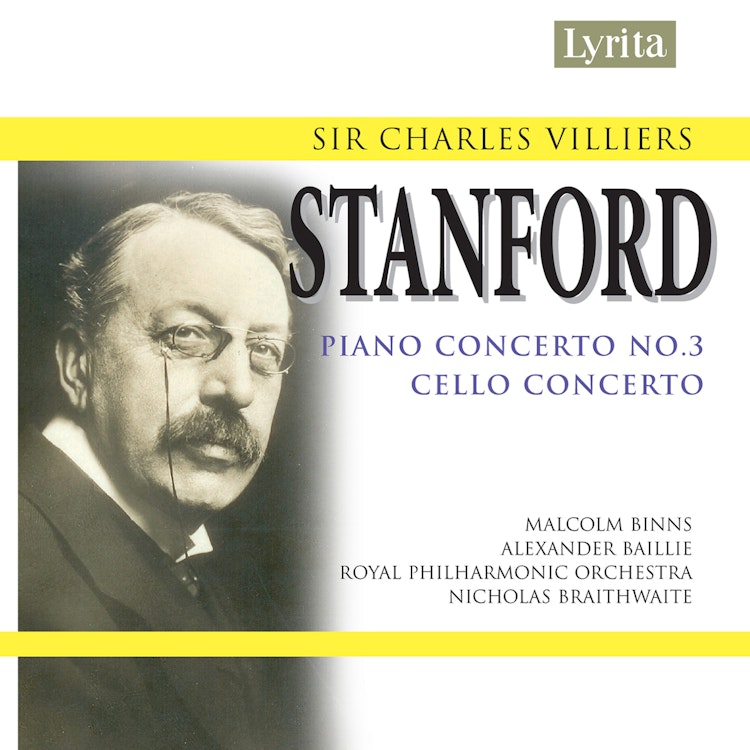
Stanford was knighted in 1902 and held prestigious appointments including conductor of the Bach Choir, Professor of Music at Cambridge, and director of the Leeds Festival.
Composer Biography
Stanford's father supported his son's musical ambitions on the condition that he first attend university and then study music on the Continent.
Notable Performances
As organist at Trinity College, Cambridge, Stanford transformed the Cambridge University Music Society into a full chorus, achieving standards that allowed for first English performances of works like Brahms' Alto Rhapsody and his First Symphony.
Composer Biography
Charles Villiers Stanford came from a cultured Dublin family, with his father being a leading Protestant lawyer who played cello and sang, and leading Dublin intellectuals as constant visitors.
Composer's Artistic Vision
Despite his German training, Stanford tirelessly worked to establish an independent 'British School' of music and championed British composers, including his pupils at the Royal College of Music.
Composition History
The Third Piano Concerto, composed in 1919, survived only as a two-piano score until Geoffrey Bush (1921-1998), a composer and Stanford scholar, orchestrated it specifically for this recording.
Cultural Impact
Stanford's teaching as Professor of Composition at the Royal College of Music for 40 years had an unprecedented influence on several generations of British composers.
You might also enjoy...
Pierné: Orchestral Works, Vol. 2
Balalaika!
Mascagni in Concert
Raitio, V.: Queen of the Flowers - Works for Small Orchestra
Handel's Last Prima Donna: Giulia Frasi in London
Wagner for Brass
Norwegian Classical Favourites
Christopher Parkening - Elmer Berstein: Concerto for Guitar