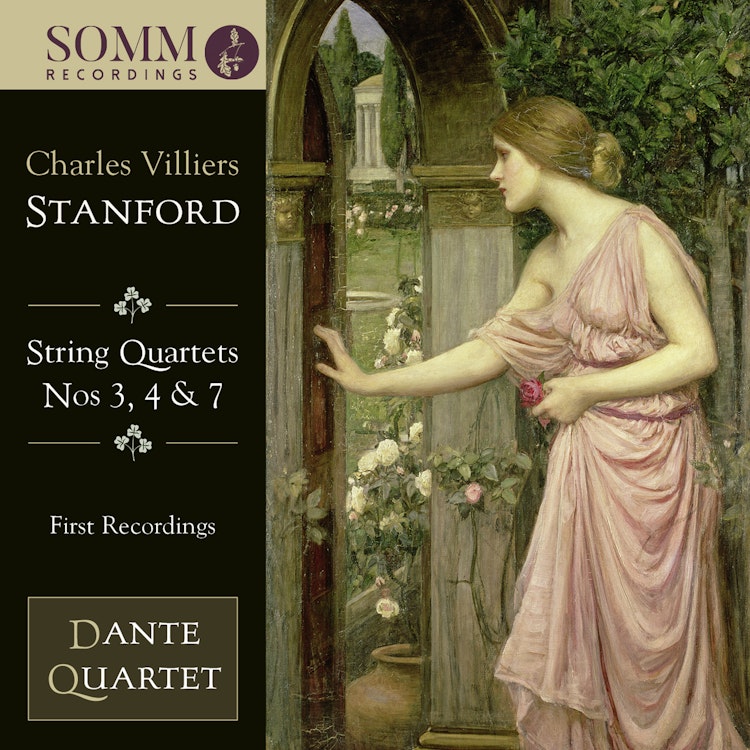
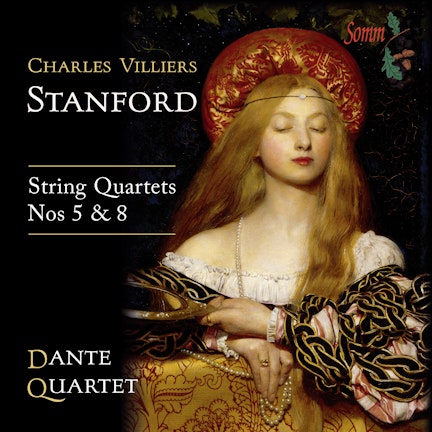
These recordings feature the first-ever recordings of Stanford's String Quartet No. 3, No. 4, and No. 7.
Compositional Technique
The finale of Stanford's Fourth Quartet features a virtuoso 9/8 metre that evokes the spirit of an Irish 'hop jig,' a rhythm he also used in his 1887 Irish Symphony.
Composer's Artistic Vision
Stanford viewed the string quartet as a serious intellectual challenge, learning structural subtlety and thematic imagination from 19th-century German composers like Brahms.
Composer Biography
Stanford passed on his compositional knowledge, particularly regarding string quartet writing, to his pupils, who included Vaughan Williams, Bridge, Dyson, and Howells.
Performer Biography
The Dante Quartet, founded by Krysia Osostowicz in 1995, has received numerous awards, including the Royal Philharmonic Society Award for Chamber Music and the Diapason d'Or.
Composition History
Stanford's String Quartet No. 3 in D minor, Op. 64 was composed rapidly in Milan, with the first three movements completed between September 22 and 26, 1896.
Critical Reception
The premiere of Stanford's String Quartet No. 3 was enthusiastically received in Cologne, with one critic noting it could remove the 'erroneous idea' that English music did not exist.