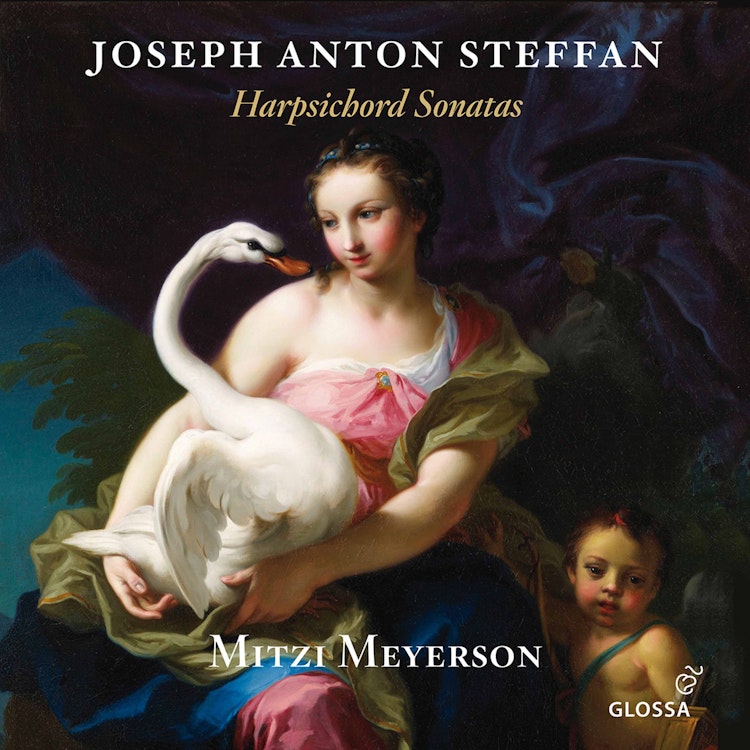
The sonatas on this album, though written for harpsichord, include dynamic markings like piano, forte, and crescendo, suggesting they were played on both harpsichord and the emerging fortepiano.
Composer Biography
Joseph Anton Steffan, born in 1726 in Kopidlno, Bohemia, was forced to leave his home due to the Prussian invasion of Bohemia in 1741.
Composer Biography
Empress Maria Theresa highly regarded Steffan and granted him a full annual income of 500 guldens for the last 20 years of his life, despite his inability to perform publicly.
Compositional Technique
Steffan's sonatas do not follow conventional forms like the fast-slow-fast structure common at the time; the first sonata is written more as a 'stream-of-consciousness'.
Compositional Technique
One sonata features a 'horribly dissonant chord and a descending tritone' with the text 'Katzengesang. Mniau!' (Cat song. Meow!), a humorous example of tone-painting.
Composer's Artistic Vision
Steffan's sonatas are considered a 'missing link' in the transition from harpsichord to piano, featuring fresh, dramatic elements, tone poems, and rhetorical devices.
Composer Biography
Steffan, a composer and keyboardist, went completely blind around 1775 but continued to teach and compose.