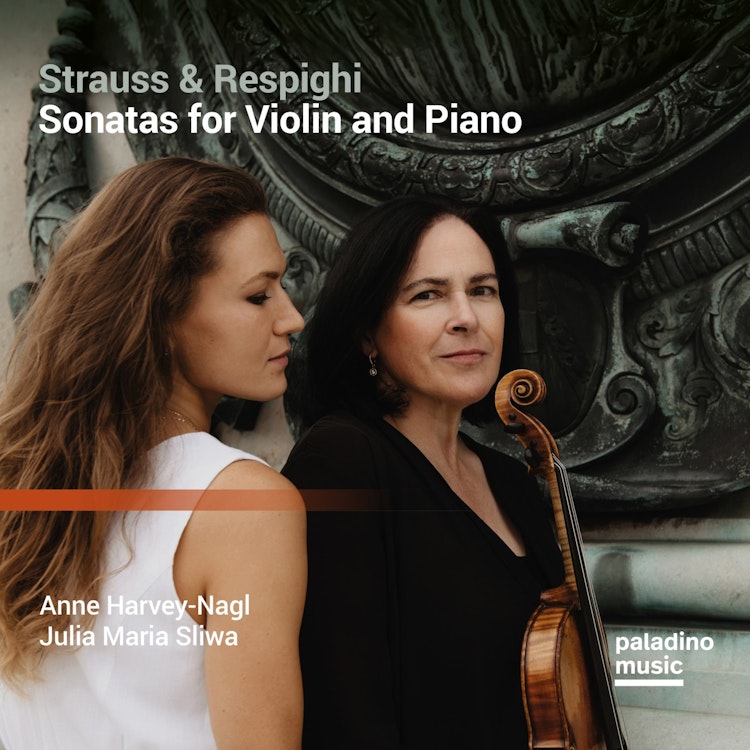
Julia Maria Sliwa, the pianist on this album, has won prizes at national and international competitions, including first prize at the Valsesia Musica International Competition.
Composition History
Richard Strauss stopped composing chamber music in 1887 to focus on opera, making his Violin Sonata, Op. 18, a farewell to the genre.
Performer Biography
Anne Harvey-Nagl, the violinist on this album, moved from her home in Australia to Europe and then to Vienna, with Richard Strauss's Violin Sonata, Op. 18, serving as a catalyst for her career there.
Critical Reception
A critic for the Chicago Daily Tribune praised Ottorino Respighi's Violin Sonata, P 110, for demonstrating how a new generation of Italian composers were moving beyond the idea that Italian music meant only Italian opera.
Composer's Artistic Vision
Both Richard Strauss and Ottorino Respighi, the composers on this album, were able to create the sound of an entire orchestra using only violin and piano in their sonatas.
Composition History
Ottorino Respighi completed his Violin Sonata, P 110, in 1917, at the same time he was composing popular works like La boutique fantasque and Fontane di Roma.
Interpretation
The two violin sonatas on this album, by Richard Strauss and Ottorino Respighi, are often combined on programs and recordings due to their distinct chamber music style.
You might also enjoy...
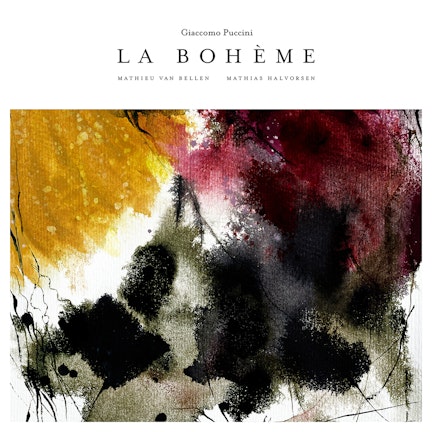
Puccini: La Bohème (Arr. M. van Bellen & M. Halvorsen for Violin & Piano) [Live]
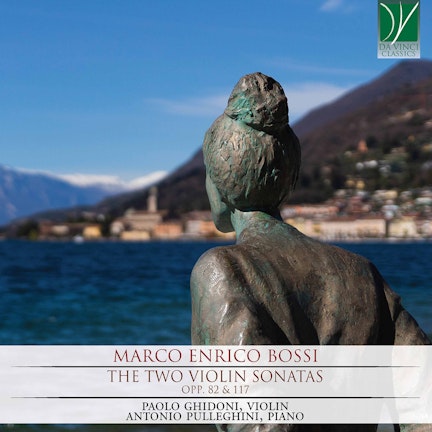
Bossi: The Two Violin Sonatas, Opp. 82 & 117
Brahms: Sonata for Piano and Violin No. 3 in D Minor, Op. 108: IV. Presto agitato
Ives: Violin Sonata No. 3
Dvorak: Sonata in G Major, Op. 100
Strauss - Violin Sonata
Weber: 6 Violin Sonatas
Felix Mendelssohn: Lieder ohne Worte (Arr. for Violin and Piano by Ferdinand David)
Brahms: Sonatas for Violin & Piano
Schubert: The Sonatinas for Piano & Violin
Robert Schumann: Three Sonaatas for Violin and Piano
Józef & Henryk Wieniawski: Music for Violin & Piano