The Sonatinas were composed during World War II, with the first movement written while Munich was heavily bombed and the work completed as Nazi crimes came to light.
Composer Biography
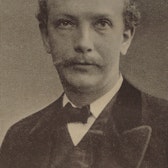
Richard Strauss's father, Franz Strauss, was a horn player in the Munich Court Opera, influencing the composer's early exposure to wind instruments.
Composer's Artistic Vision
Strauss dedicated the completed score of the Sonatinas 'To the spirit of the godly Mozart at the end of a life filled with thanks'.
Composer's Artistic Vision
Strauss recognized the clarinet family's potential for expressing 'new colour symbols and characterization of new and subtler emotions and nervous vibrations'.
Composition History
Richard Strauss composed the two Sonatinas for 16 wind instruments after completing his final opera 'Capriccio' in 1942.
Performer Biography
The armonia ensemble, formerly armonia Bläserensemble, was founded in 2000 by members of the Leipzig Gewandhaus Orchestra.
Compositional Technique
For these Sonatinas, Strauss expanded the wind ensemble by adding a C-clarinet, a basset horn (alto clarinet in F), and a bass clarinet to the traditional setup.
You might also enjoy...
The Road to Vienna
Jorge E. López: Works for Ensemble
An Enchanted Christmas
50 x 12: Half a Century of Music
Burned into the Orange: Music of Peter Gilbert
Christmas Brass Festival
Kommet Ihr Hirten
Christmas with London Brass
Musiques Nouvelles | Coffret des 60 ans
Nocturne
Angel Dances
In the Streets of London: A 17th Century Musical Pub Tour