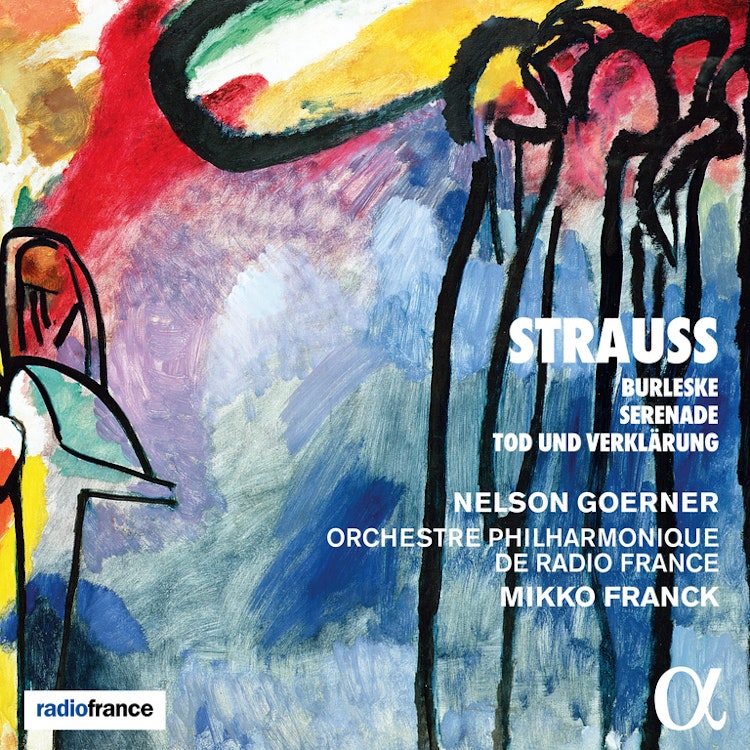
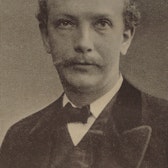
Richard Strauss conducted his Burleske in London on October 9, 1947, with pianist Alfred Blumen; this was the last concert Strauss ever gave, over sixty years after composing the piece.
Composer's Artistic Vision
Richard Strauss's Serenade for Wind Instruments recalls Mozart's 'Gran Partita' Serenade K. 361, even using the same number of thirteen winds as Mozart.
Compositional Technique
The Burleske, a youthful work by Richard Strauss, daringly opens with a theme entrusted to the timpani, which then engage in a dialogue with the orchestra and piano.
Composer's Artistic Vision
Richard Strauss stated that Death and Transfiguration was a product purely of his imagination, not a lived experience, and that the program was added as an afterthought.
Performer Biography
Nelson Goerner, the pianist on this recording, won first prize at the Franz Liszt Competition in Buenos Aires in 1986 and the Geneva Competition in 1990.
Notable Performances
The first performance of Strauss's Burleske was given by Eugen d'Albert, an ex-pupil of Liszt, on June 21, 1890, in Eisenach, conducted by the composer himself.
Composition History
Richard Strauss's Burleske was initially deemed "unplayable" by Hans von Bülow, his conducting assistant at Meiningen, despite Bülow having premiered Liszt's Sonata in B minor.
You might also enjoy...
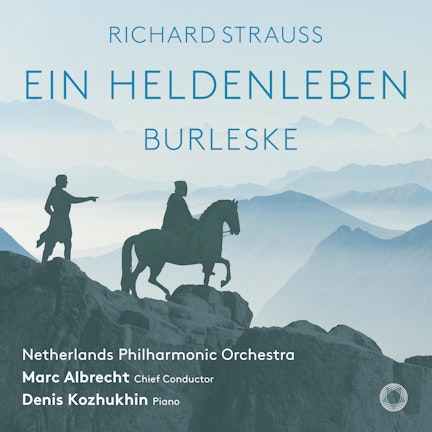
Strauss: Burleske & Ein Heldenleben
Strauss, R.: Also Sprach Zarathustra, Op. 30 / Burleske in D Minor, Trv 145
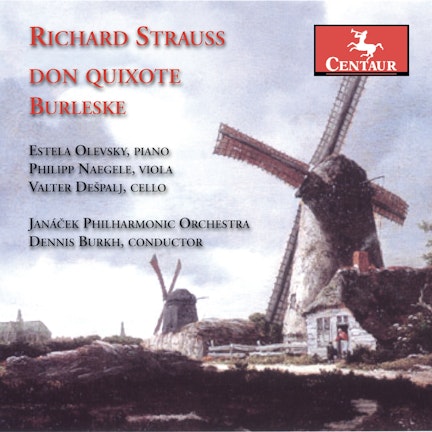
Strauss: Burleske / Don Quixote
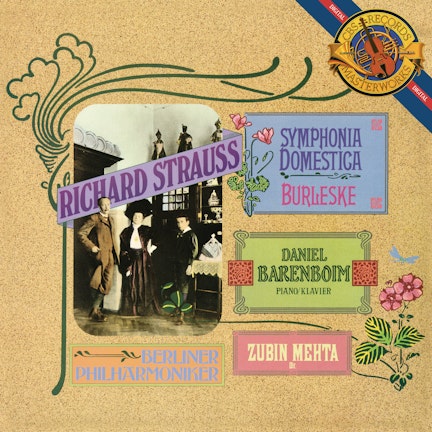
Strauss: Symphonia Domestica & Burleske
R. Strauss: Ein Heldenleben & Burleske
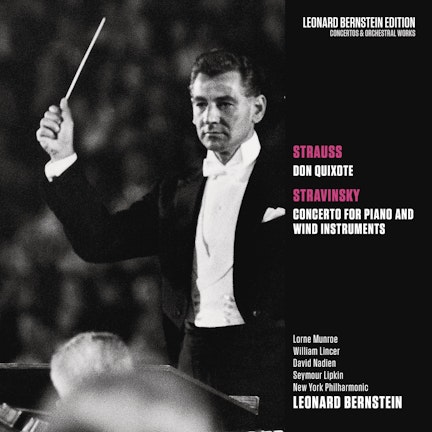
Strauss: Don Quixote, Op. 35 - Stravinsky: Concerto for Piano and Wind Instruments
Franck: Œuvres Orchestrales
Dupont & Benoit: Piano Concertos (Hyperion Romantic Piano Concerto 80)