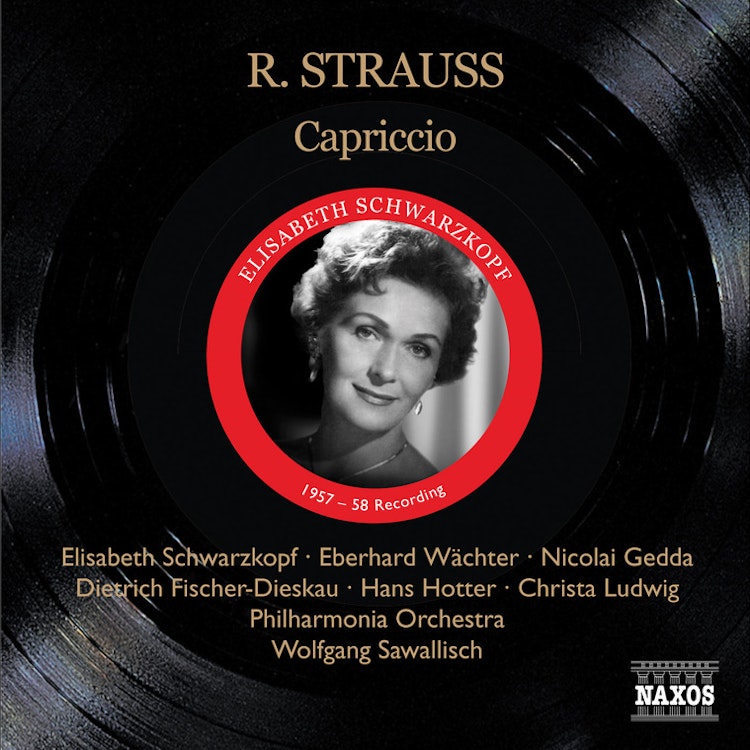
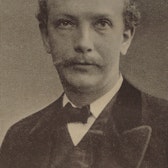
Richard Strauss's opera Capriccio was created after his long-time librettist Hugo von Hofmannsthal died, leading him to collaborate with Clemens Krauss, the director of the Munich Opera.
Performer Biography
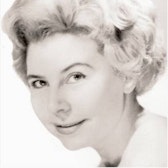
Elisabeth Schwarzkopf, who sings the central role of the Countess in this recording, made her operatic stage début in Berlin in 1938 and created the part of Anne Trulove in Stravinsky's The Rake's Progress at its Venice premiere in 1951.
Performer Biography
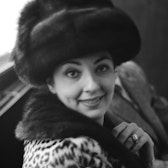
Dietrich Fischer-Dieskau, who sings the poet Olivier in this recording, made his professional début in 1947 as a baritone soloist in Brahms's German Requiem and was active as an international opera singer and song recitalist.
Composition History
The central idea for Capriccio, an opera about whether words or music are more important, came from Richard Strauss himself: a sonnet written by a poet and set to music by a composer, both in love with a countess.
Recording & Production
This 1957-58 recording of Capriccio was made in monophonic sound, despite increasing interest in stereophonic sound at the time, likely due to EMI having few stereo recorders available.
Recording & Production
This landmark recording of Capriccio was produced by EMI record producer Walter Legge in London during 1957 and 1958, featuring his Philharmonia Orchestra.
Critical Reception
Capriccio was immediately recognized as one of Richard Strauss's finest and most subtle works, posing the central dilemma in opera: what is more important, the words or the music?
You might also enjoy...
Vinci: Artaserse: Overture, Arias, Duet, & Final Chorus
Bellini: Il Pirata
Mozart: Così fan tutte, K. 588
Mozart: Le nozze di Figaro (The Marriage of Figaro), K. 492