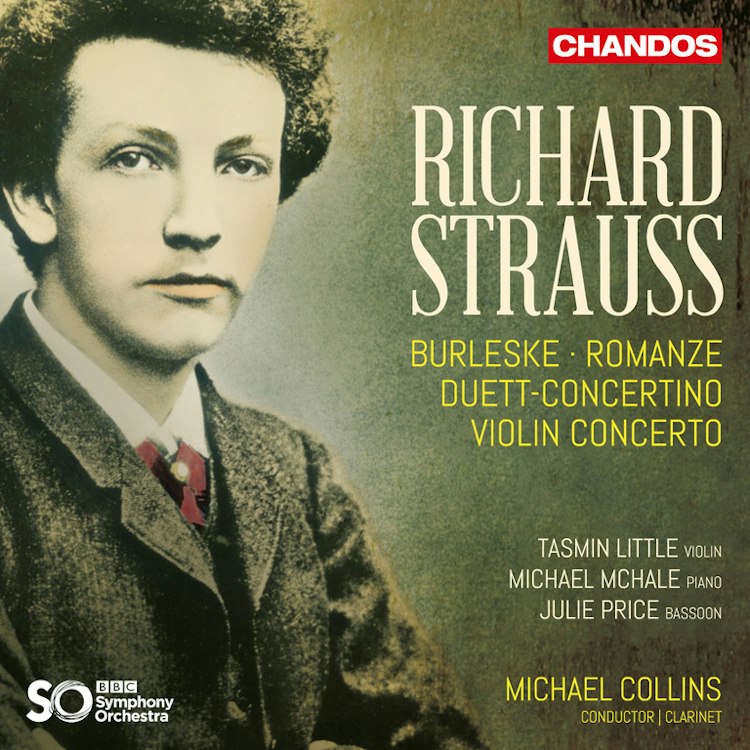
Richard Strauss's concertante works date from either end of his long career. The 1879 Romanze for Clarinet and Orchestra was his first attempt at a work for soloist and orchestra, and the Violin Concerto and Burleske for piano and orchestra were written just a few years later. The Duett-Concertino for Clarinet, Bassoon and Strings, on the other hand, was one of his very last works. The BBC Symphony Orchestra here accompany soloists including violinist Tasmin Little and clarinettist Michael Collins, who also conducts.
Featuring
Michael Collins
Michael McHale
Julie Price
Tasmin Little
BBC Symphony Orchestra
Richard Strauss
Did you know?
1/7
Performer Biography
Tasmin Little, the violinist on this album, plays a violin made in 1757 by Giovanni Battista Guadagnini.
Composition History
Richard Strauss initially declined an offer to publish his Burleske, and did not write another work for piano and orchestra until 1925.
Compositional Technique
For his Duett-Concertino, Richard Strauss envisaged a fairy-tale program where the clarinet represents a princess and the bassoon a dancing bear who transforms into a prince.
Performer Biography
Michael Collins, the conductor and clarinetist on this album, was awarded an MBE in 2015 for his services to music and plays exclusively on Yamaha clarinets.
Composition History
The Violin Concerto was conceived as a gift for Richard Strauss's violin teacher and distant relative, Benno Walter, who was the leader of the Royal Bavarian Orchestra.
Composer's Artistic Vision
Richard Strauss described his late works, including the Duett-Concertino, as 'splinters from an old man's workshop, with no great claims, unless it should be to entertain in a light tone'.
Composer Biography
Richard Strauss's first music was written at age six, encouraged by his father, Franz Strauss, who was the principal horn in the Munich Court Orchestra.
You might also enjoy...
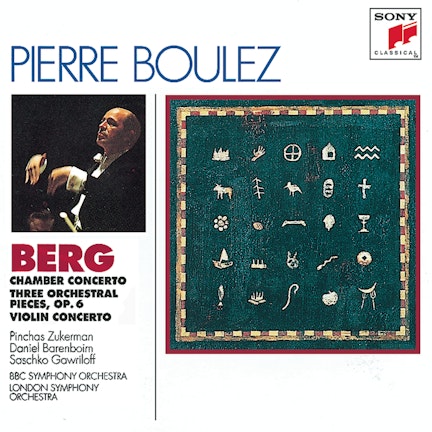
Berg: Chamber Concerto; Three Pieces for Orch.; Concerto for Violin and Orchestra
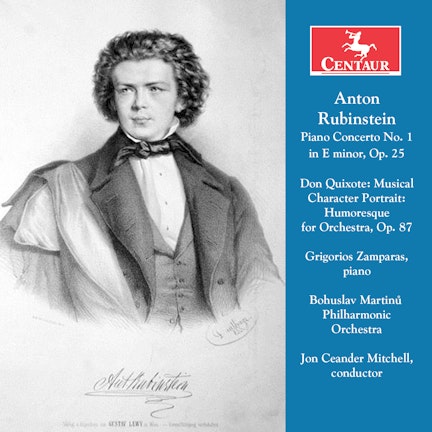
Rubinstein: Piano Concerto No. 1 in E Minor, Op. 25 & Don Quixote, Op. 87
Dvorak: Piano Concerto / Violin Concerto
La Folle Journée 2019: Carnets de voyage
Bartók: Concertos
The Best of Rachmaninoff
The Best of Saint-Saëns
Celebrating 20 Years Together
Silence, Vol. 2
Lalo: Symphony in G minor - Piano Concerto in F minor
Weber · Crusell · Berg: Bassoon Concertos
Rachmaninov: Piano Concerto No.2; Symphony No.2 etc.
Tchaikovsky: Symphony No. 6 in B minor 'Pathétique' . Piano Concerto No. 3 in E flat
Bruch: Variations for Cello & Orchestra, Op. 47 - Canzone for Cello & Orchestra, Op. 55 - Kol Nidrei