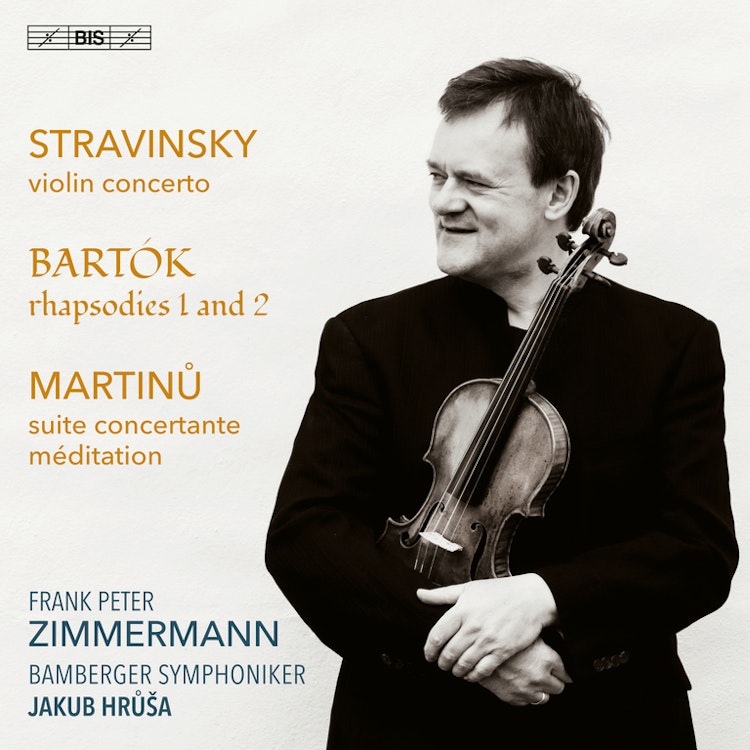
Stravinsky, Bartók & Martinů: Works for violin and orchestra
1/12/2024, 13 Tracks, 1:08:55
Featuring
Frank Peter Zimmermann
Jakub Hrůša
Bamberger Symphoniker
Igor Stravinsky
Béla Bartók
Bohuslav Martinů
Did you know?
1/7
Instruments
The orchestration of Bartók's First Rhapsody for violin and orchestra notably features the cimbalom, while the Second Rhapsody includes cor anglais, harp, celeste, piano, and percussion.
Compositional Technique
Each movement of Stravinsky's Violin Concerto opens with a variation on a specific chord, stretching from E to top A, which the dedicatee, Samuel Dushkin, initially found unplayable.
Composer's Artistic Vision
These composers, facing political upheaval and cultural displacement, each found unique ways to reinvent tonal music, blending their Eastern European identities with Western influences.
Composer Biography
Béla Bartók, a pioneer in ethnomusicology, gathered much of the folk music material for his Rhapsodies during a 1910 trip to Siebenbürgen, central Romania.
Composition History
Stravinsky was initially hesitant to compose his Violin Concerto due to limited knowledge of writing for the instrument, but the soloist, Samuel Dushkin, offered his technical expertise.
Historical Context
Stravinsky, Bartók, and Martinů, all established international figures, emigrated due to their intolerance for fascism with the onset of World War Two.
Performer Biography
Frank Peter Zimmermann, the violinist on this recording, plays on the 1711 Antonius Stradivari violin 'Lady Inchiquin', provided by the Kunstsammlung Nordrhein-Westfalen.
You might also enjoy...
Saint-Saëns : Le Carnaval des animaux, Introduction et Rondo Capriccioso
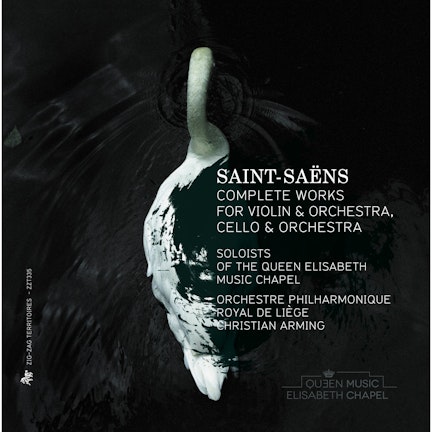
Saint-Saëns: Complete Works for Violin and Orchestra & Cello and Orchestra
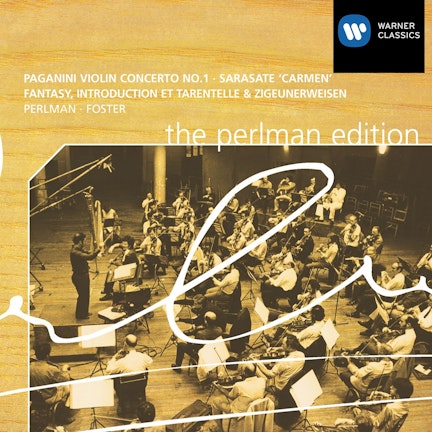
Paganini: Violin Concerto No.1 / Sarasate: Carmen Fantasy etc.
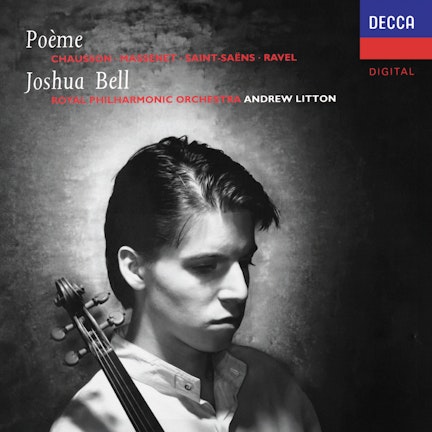
Poème - Chausson, Massenet, Saint-Saëns, Ravel
Poème
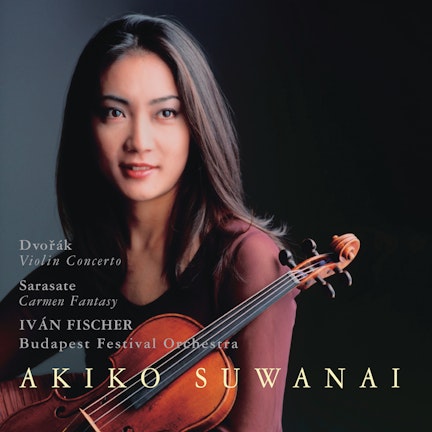
Dvorák: Violin Concerto / Sarasate: Carmen Fantasy
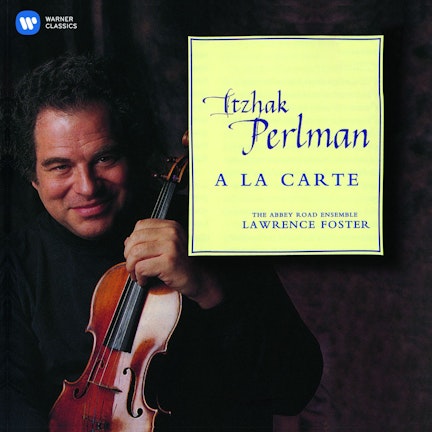
A la carte
Winniawski, Kreisler, Hubay & Sarasate: Violin Works
Saint-Saëns: Complete Works for Violin and Orchestra & Cello and Orchestra
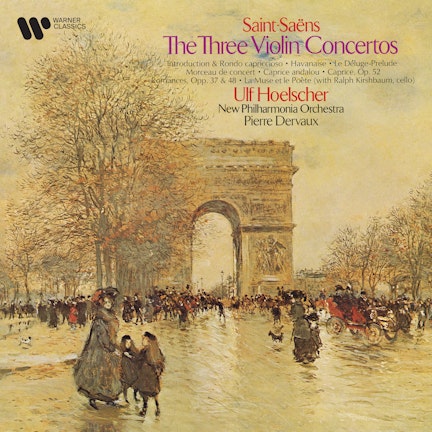
Saint-Saëns: The Three Violin Concertos, Introduction et rondo capriccioso, Havanaise...