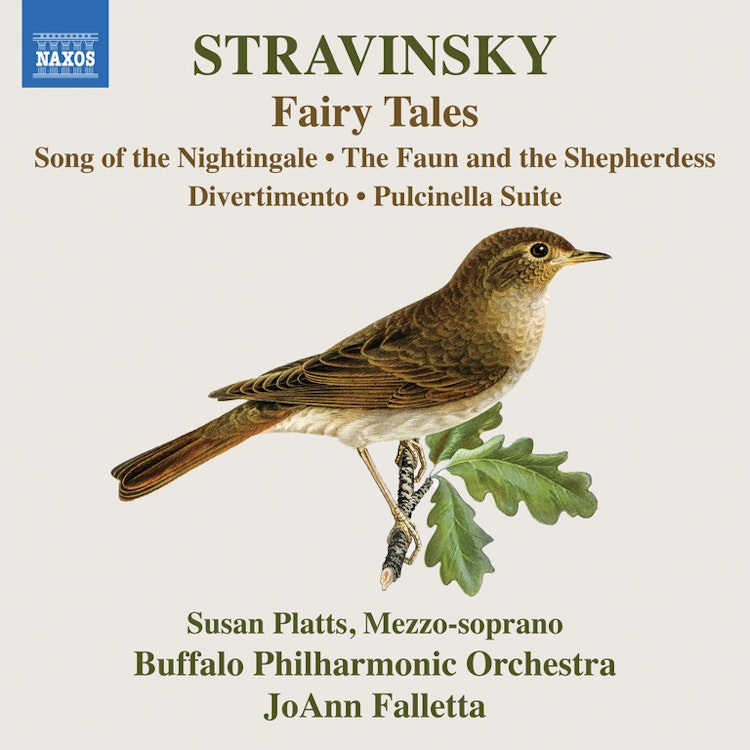
Stravinsky's opera The Nightingale was completed after a significant delay, as he set it aside to compose his career-defining ballets The Firebird and Petrushka.
Composer's Artistic Vision
Composer Igor Stravinsky famously stated that "Music is, by its very nature, essentially powerless to express anything at all," despite spending his career telling stories through music.
Performer Biography
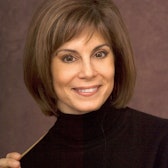
JoAnn Falletta, the conductor, became the first woman to lead a major American orchestra as music director of the Buffalo Philharmonic Orchestra.
Composer's Artistic Vision
Stravinsky's ballet The Fairy's Kiss is a homage to Pyotr Il'yich Tchaikovsky, created on the 35th anniversary of Tchaikovsky's death, using material from his lesser-known piano pieces and songs.
Composer's Artistic Vision
Stravinsky considered Pulcinella his "discovery of the past," which made his later works possible, transforming 18th-century Neapolitan music into an original composition.
Compositional Technique
In The Faun and the Shepherdess, Stravinsky described the work as sounding like "Wagner in places, like Tchaikovsky's Roméo et Juliette in other places (but never like Rimsky-Korsakov, which must have troubled that master), and like Stravinsky not at all."
Critical Reception
The 1919 premiere of Chant du Rossignol, a tone poem derived from Stravinsky's opera The Nightingale, was met with "tumultuous protests and negative reviews" from Swiss audiences.