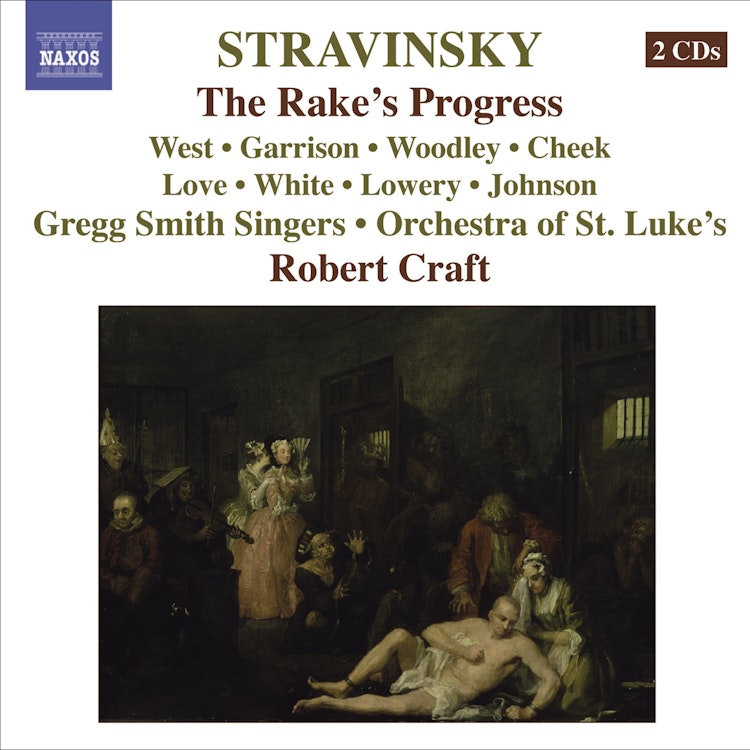
Igor Stravinsky began composing his opera, The Rake's Progress, on May 8, 1948, shortly after receiving the completed libretto from W.H. Auden.
Interpretation
This 1993 recording of The Rake's Progress, conducted by Robert Craft, is considered as significant as Stravinsky's own 1953 Metropolitan Opera recording.
Composer Biography
During the composition of The Rake's Progress, Stravinsky's primary source of income was conducting, but he reduced his concert engagements to dedicate his time to the opera.
Compositional Technique
Stravinsky's earliest sketches for The Rake's Progress included instrumentation indications, which he rarely revised, though he did change some instruments like the second horn to trumpet and cembalo to bassoon for specific effects.
Composer's Artistic Vision
Stravinsky was inspired by the final two scenes of The Rake's Progress months before he read the libretto, composing the string quartet Prelude to the Graveyard scene in December 1947.
Performer Biography
Robert Craft, the conductor, had a historic association with Igor Stravinsky, serving as his constant companion, co-conductor, and musical confidant for over twenty years, which contributed to his understanding of the composer's intentions.
Compositional Technique
Stravinsky would often begin setting words by writing rhythms in musical notation above them, allowing melodic and intervallic ideas to emerge during this process.