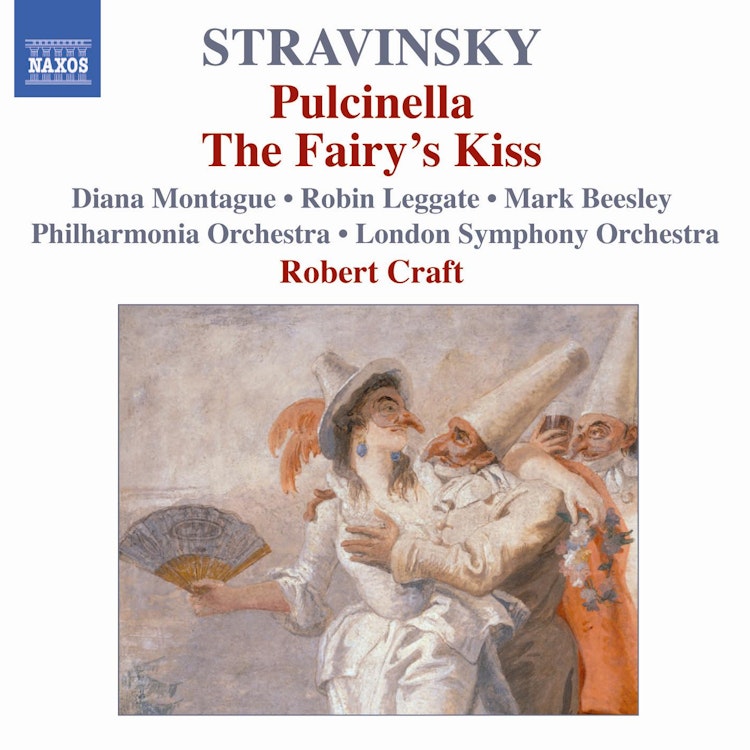
Stravinsky: Pulcinella - Le Baiser De La Fee (The Fairy's Kiss)
7/17/2006, 23 Tracks, 1:18:22
Featuring
Robert Craft
Diana Montague
Robin Leggate
Mark Beesley
Philharmonia Orchestra
London Symphony Orchestra
Igor Stravinsky
Did you know?
1/7
Compositional Technique
In The Fairy's Kiss, Stravinsky extensively altered and developed melodies from Tchaikovsky's early piano pieces and songs, expanding them into ballet numbers to form a continuous dance symphony.
Composer's Artistic Vision
The Fairy's Kiss is an homage to Tchaikovsky, with the young man in the ballet representing Tchaikovsky himself, and the Fairy symbolizing his Mephistophelean muse.
Performer Biography
Robert Craft, the conductor on this album, had a historic association with Igor Stravinsky, serving as his constant companion, co-conductor, and musical confidant for over twenty years.
Composition History
The libretto for Pulcinella was written and choreographed by Léonide Massine, with characters drawn from the Commedia dell'Arte.
Composition History
Stravinsky's ballet Pulcinella was initially attributed to 'Igor Strawinsky d'après Giambattista Pergolesi,' though less than half of the music was actually by Pergolesi.
Compositional Technique
In Pulcinella, Stravinsky transformed 18th-century music into a modern work primarily through innovative instrumentation, such as using the trombone like a 1920s jazz band instrument.
Recording & Production
This album was recorded at Abbey Road Studio No. 1 in London, England, with sessions taking place in January 1995 for Pulcinella and January/February 1997 for The Fairy's Kiss.
You might also enjoy...
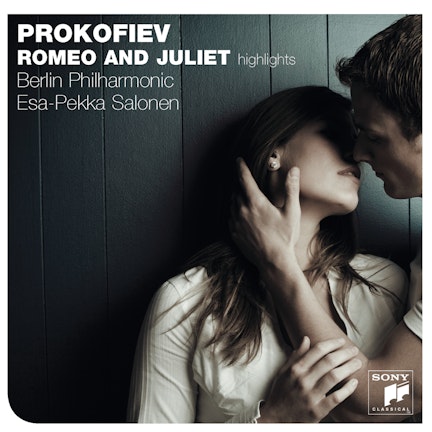
Prokofiev: Romeo & Juliet - Highlights
Prokofiev: Romeo & Juliet
Stravinsky: The Great Ballets
The Rite of Spring, K015 Pt. 2 "The Sacrifice": II. Mystic Circles of the Young Girls
Prokofiev: Romeo and Juliet
Stravinsky: Petrushka; Jeu de cartes
Stravinsky: Le Sacre du Printemps; The Firebird
Stravinsky: The Rite of Spring
Stravinsky: Petrouchka; Scènes de ballet
Stravinsky: The Rite Of Spring - The Works
Stravinsky: L'Oiseau de feu (1911 Version): X. Khorovod (Ronde) des princesses