In The Soldier's Tale, the violin represents the Soldier's soul, a symbolic element emphasized by Stravinsky himself, highlighting the Faustian nature of the Soldier's pact with the Devil.
Composer's Artistic Vision
The Soldier's Tale was intended as a touring semi-dramatic work for a small group of musicians and performers, designed to be staged on a trestle stage even in villages without a theatre.
Historical Context
The planned tour for The Soldier's Tale was halted by the outbreak of the Spanish influenza pandemic, which decimated populations worldwide.
Compositional Technique
Stravinsky's choice of instrumental lineup for The Soldier's Tale, featuring cornet, trombone, clarinet, bass, and percussion, remarkably echoes early Dixieland jazz.
Composition History
Igor Stravinsky's The Soldier's Tale was conceived during post-World War I economic hardship, with the composer having lost his means in Russia due to the October Revolution.
Composition History
The story for The Soldier's Tale is based on a Russian folk tale, 'The Deserter and the Devil,' from Alexander Afanasiev's anthology, adapted by Stravinsky's collaborator Charles-Ferdinand Ramuz.
Recording & Production
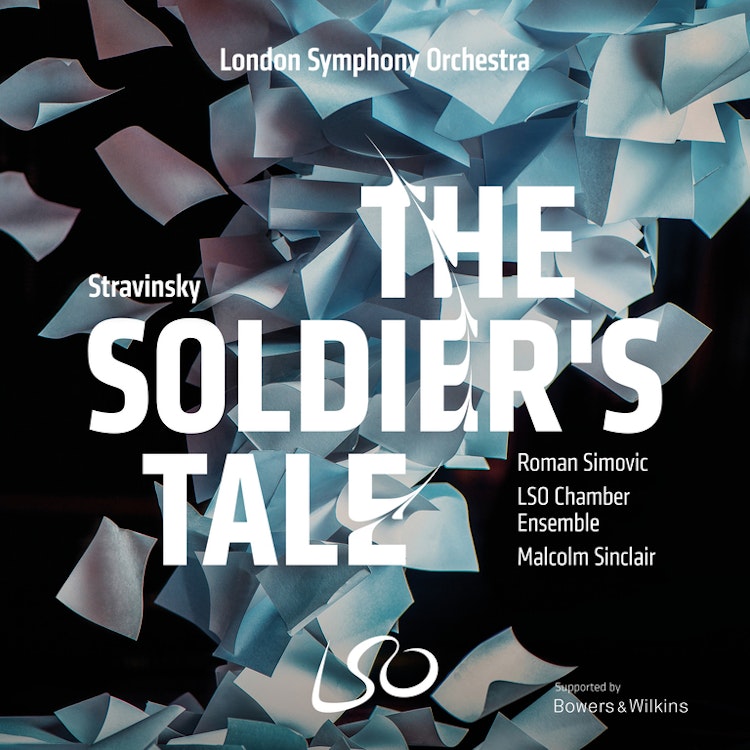
This recording of The Soldier's Tale was made live in DSD 128fs on October 31, 2015, in the Jerwood Hall, LSO St Luke's, London.
You might also enjoy...
Pacius: Princess of Cyprus (The) - Incidental Music To the Play by Zacharias Topelius
Tchaikovsky: The Nutcracker, Op. 71, TH 14 (Excerpts Arr. for Brass Septet & Percussion)
Le Martyre de Saint-Sébastien
Orff: Ein Sommernachtstraum
The Soldier's Tale (Narrated by Roger Waters)
Cyrano de Bergerac: L'autre monde, ou les estats & empires de la Lune