The term 'serenade' originates from the Latin 'serenus', meaning soft, serene, bright, and light, and originally designated night music offered under a lady's window.
Composer Biography
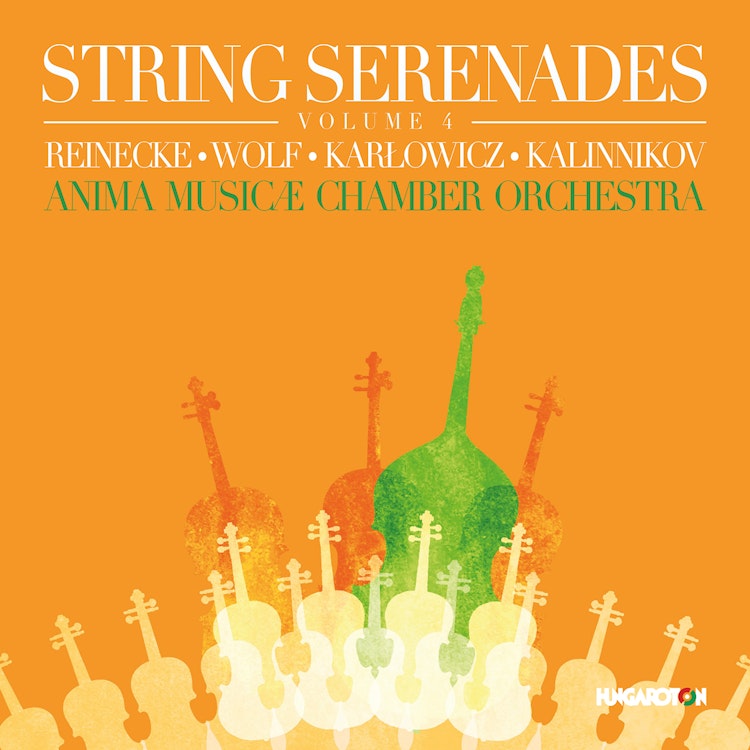
Vasily Kalinnikov, a Russian composer, was a friend and protégé of Tchaikovsky, who helped him secure a scholarship and conducting positions.
Composer Biography
Hugo Wolf, a passionate Wagnerian, composed about 230 Lieder, primarily to poems by Möricke, Eichendorff, Goethe, and Spanish and Italian poets.
Composition History
In the 19th century, with the rise of public concert life, serenades adapted to large concert halls, moving away from open-air performances.
Composer Biography
Carl Reinecke, a prolific composer with about 280 opuses, was also the longest-serving chief conductor of the Gewandhaus orchestra in Leipzig from 1860 to 1895.
Compositional Technique
19th-century serenades often employed strings only, as seen in works by Dvořák, Tchaikovsky, Hugo Wolf, and Elgar, but also featured special combinations of string and wind instruments.
Composer Biography
Mieczysław Karłowicz, a Polish composer, studied under Heinrich Urban and Arthur Nikisch and is considered a transition between Fryderyk Chopin and Karol Szymanowski in Polish composition.
You might also enjoy...
Authentic
Dvorák: Serenades Opp.22 & 44
Dvorak - String Serenade in E, Op.22 / Wind Serenade in D minor Op.44
Brahms: Serenades No. 1 & 2
Dvorák: Serenades
Dvorak: Serenades opp. 22&44
Grieg: Holberg Suite, Op. 40 - Dvořák: Serenade for Strings in E Major, Op. 22, B. 52 - Elgar: Serenade for Strings in E Minor, Op. 20
Malipiero: Piano Concertos Nos. 1-6
Atterberg: Orchestral Works
Constant: 4 Concertos pour cor, orgue de Barbarie, saxophone et trombone