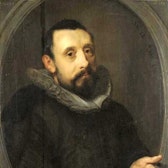
Sweelinck held only one position for 44 years: organist at the Oude Kerk in Amsterdam, a role that allowed him time for other activities like composing and inspecting organs.
Composer Biography
Jan Pieterszoon Sweelinck (1562-1621), an internationally renowned composer, rarely left Amsterdam, undertaking only occasional trips as an organ-building consultant.
Composer's Artistic Vision
Sweelinck's music, despite his homebound lifestyle, was internationally influenced, showing familiarity with French chanson, English virginalists, Italian counterpoint, and Venetian vocal traditions.
Historical Context
Sweelinck's career and financial success mirrored Amsterdam's economic growth, as the city transformed from a regional trade hub to a leading European metropolis during his lifetime.
Compositional Technique
Sweelinck's sacred choral music, particularly his Latin Cantiones Sacrae, features modern-sounding devices like chromaticism, as heard towards the end of his Te Deum.
Composition History
Sweelinck undertook the massive project of setting all 150 Psalms to music, using French rhymed versions by Marot and de Bèze, with financial support from wealthy Amsterdam burghers.
Historical Context
Sweelinck's vocal works, including his French Psalms, were intended for private use by prosperous bourgeois families who spoke French, not for Calvinist worship services due to strict musical restrictions.
You might also enjoy...
Padovano: Domine a lingua dolosa a 5
La Pellegrina
Passio Domini Nostri Jesu Christi Secundum Johannem
Gesualdo: Tenebrae Responseries For Maundy Thursday