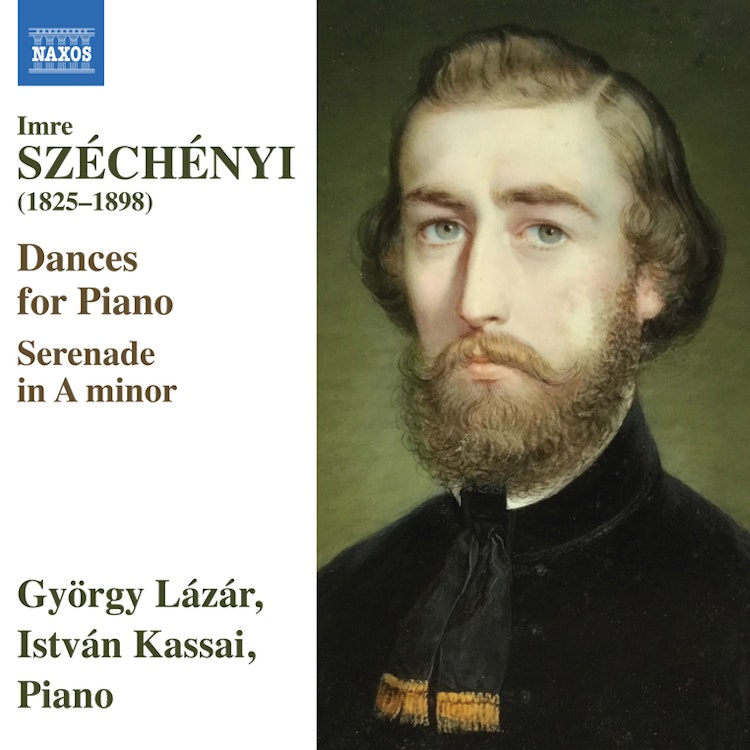
Széchényi's dances were popular and in demand during his lifetime, though they are now little known.
Composer Biography
Imre Széchényi, the composer, was a diplomat who served as Austro-Hungarian ambassador to Berlin and was friends with figures like Franz Liszt and Johann Strauss II.
Historical Context
As a diplomat, Széchényi signed significant treaties including the Dreikaiservertrag ('League of Three Emperors') in 1881 and participated in the 1885 Berlin Conference regarding African colonization.
Composer Biography
Széchényi grew up with Franz Joseph I, the future Emperor of Austria, and his brother Maximilian I of Mexico, due to his father's position as chief court chamberlain.
Composition History
Johann Strauss II, a friend of Széchényi, frequently included Széchényi's works in his concert programs and even dedicated his 'Gedankenflug-Waltz, Op. 215' to him.
Composition History
Franz Liszt, who became friends with Széchényi in 1864, adapted one of Széchényi's works, 'Introduction and Hungarian March', dedicating it to him and premiering it in 1873.
Recording & Production
This album includes five polkas and mazurkas by Széchényi that were never scored for large orchestra, making them unique to this recording.