Szymanowski's Twenty Mazurkas, Op. 50, were composed between 1924-25, providing a needed break from his magnum opus, the opera Król Roger (King Roger).
Compositional Technique
The Twelve Studies, Op. 33, from Szymanowski's middle period, often lack key signatures and feature bitonality and polytonality in their harmonic structure.
Performer Biography
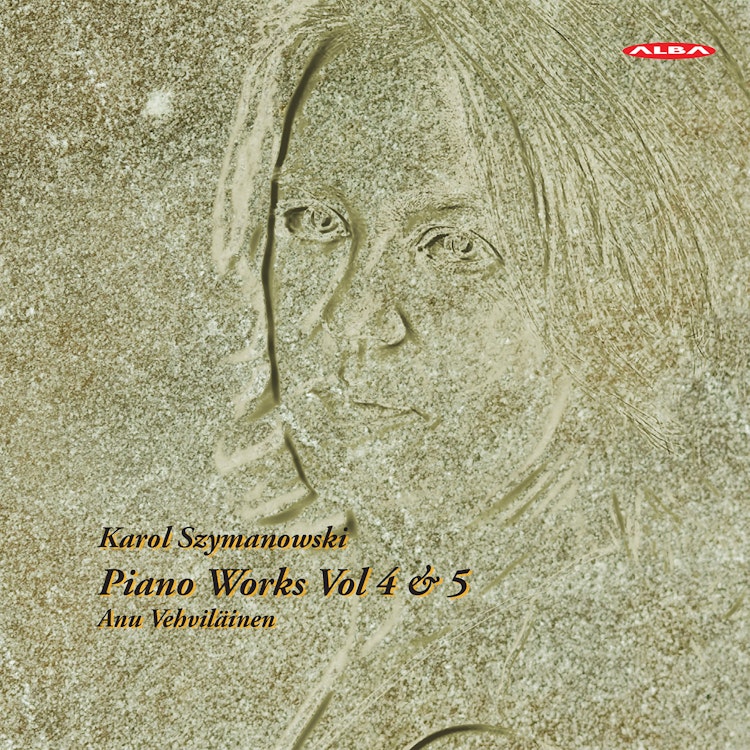
Pianist Anu Vehviläinen, who recorded this album, undertook the project of recording Szymanowski's entire solo piano output after a reviewer mistakenly announced she was doing so.
Composer's Artistic Vision
Szymanowski composed all his works at the piano and knew the instrument well, but he primarily wanted to compose large-scale forms for full orchestra.
Historical Context
Karol Szymanowski spent the years of the First World War mostly in Ukraine, where he found new inspiration and developed his most original sound world in works like the Twelve Studies, Op. 33.
Compositional Technique
Szymanowski's early piano works often used the piano as a substitute for an orchestra, resulting in massive textures that demand a lot from the performer.
Composer Biography
Karol Szymanowski's piano music is divided into three style periods: 1900-1913, 1914-1919 (the "Mediterranean" period), and 1920-1933 (the folk-inspired period).
You might also enjoy...
Poulenc: Piano Works
Poulenc: Piano Melodies
Reizenstein: Works for Piano
Bliss: Piano Works
Poulenc: The Complete Music for Solo Piano
Piano Works by Zhu Jian'er
Lyubomír Pípkov: Ludus Rithmicus, Complete Works for Piano
SZYMANOWSKI, K.: The Complete Piano Music
Messiaen: Petites esquisses, Etudes de rythmes, Canteyodjaya, Hommage P. Dukas, Prelude 1964
Poulenc: Piano Music & Chamber Works
Polovinkin: Piano Works
Schoenberg: Piano Works / Webern: Variations Op.27