Marie Radauer-Plank, the violinist on this recording, plays a 1746 Dom Nicolo Amati violin.
Cultural Impact
Szymanowski's 'Mythes' served as a model for many later composers who focused on the violin, including Béla Bartók.
Composition History
Szymanowski's friendship with violinist Paul Kochanski was crucial, as Kochanski advised him on nearly all his works for violin and piano.
Compositional Technique
Szymanowski's 'Mythes' for violin and piano introduced new tonal possibilities for the violin, such as artificial harmonics, quarter-tones, and constantly alternating trill melodies.
Composer's Artistic Vision
In his final creative phase (1920s-1937), Szymanowski focused on Polish folk music, developing an innovative style based on its elements and melodies.
Composer Biography
Karol Szymanowski, the composer, was also a respected pianist in Poland and often performed his own works with violinist Paul Kochanski.
Composition History
During World War I, Szymanowski was inspired by Arabic-Persian and Greek cultures, which led to works like 'Mythes' and 'Nocturne and Tarantella'.
You might also enjoy...
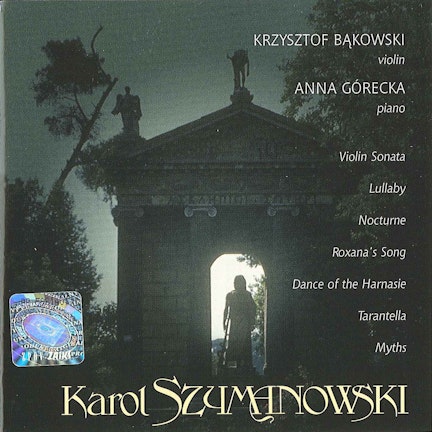
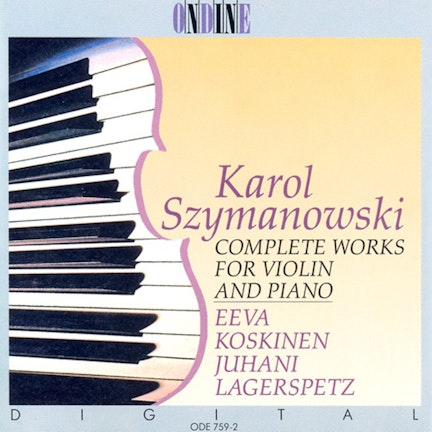
Szymanowski: Violin Sonata / Mythes / Notturne and Tarantella