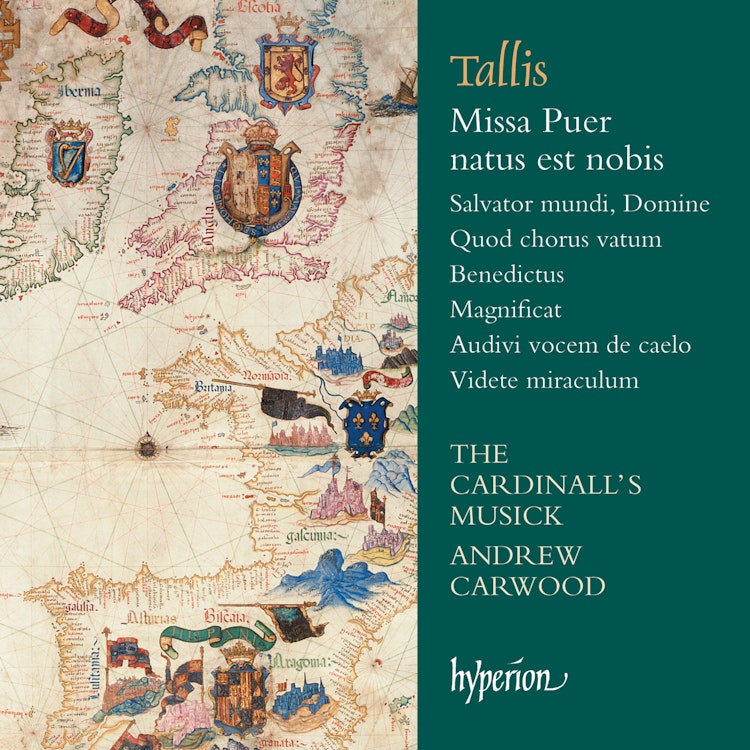
Tallis: Missa Puer natus est nobis & Other Sacred Music
11/24/2023, 10 Tracks, 1:07:39
Featuring
Andrew Carwood
The Cardinall's Musick
Thomas Tallis
Anonymous (Gregorian Chant)
Did you know?
1/7
Composition History
The Missa Puer natus est nobis may have been performed at Christmas 1554 and possibly celebrated Queen Mary I's suspected pregnancy at the time.
Compositional Technique
The Missa Puer natus est nobis is scored for seven voices (AATTBarBB), an unusual configuration that may have been chosen to suit performances by Philip's Chapel Royal, which lacked high treble voices.
Compositional Technique
Tallis's Missa Puer natus est nobis uses a plainsong tune as a cantus firmus, a technique harking back to earlier English Mass settings, and features a head-motif where the same music starts each movement.
Compositional Technique
Tallis's Missa Puer natus est nobis combines English and Flemish styles, featuring slow-moving harmonies, passing notes in melodies, and the 'English cadence' (a clash of flattened and sharpened leading notes).
Performer Biography
The Cardinall's Musick, founded in 1989, is known for its extensive study of English Renaissance music and for combining academic research with the soloistic ability of its singers.
Historical Context
The 1550s in England were a confusing and challenging decade, marked by religious upheaval under Edward VI and then Mary I, war with Scotland, and economic downturns.
Composition History
Queen Mary I's arrival on the throne was a stimulating period for composers, as music was again required in Latin, allowing for more voices and longer pieces.
You might also enjoy...
Heavenly Harmonies
The Tallis Scholars Sing Thomas Tallis
Unto Us A Child Is Born - Puer Natus Est Nobis - Tudor Christmas Music By Tallis And Byrd