Giuseppe Tartini (1692-1770) was a virtuoso violinist, composer, theoretician, and teacher, and a cultural reference point in 18th-century European musical circles.
Composition History
The 'Accademia degli Imperterriti' (Academy of the Undaunted), led by abbot Vincenzo Rota, would adapt Tartini's violin concertos for performance as trios, sonatas, or string quartets with the composer's approval.
Composition History
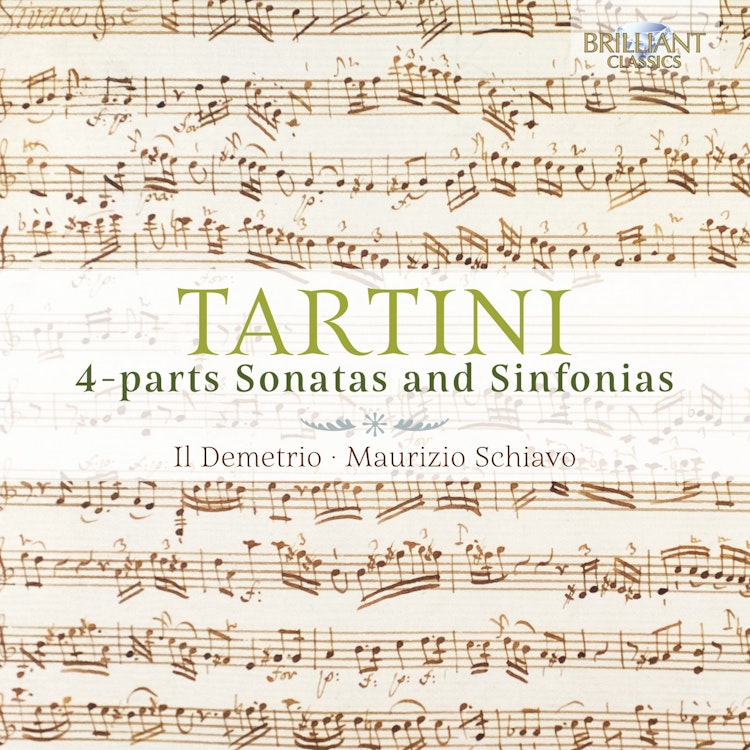
Tartini's 4-part works for strings (two violins, viola, and cello) are few in number compared to his other compositions and belong to the later phase of his career, likely the 1760s and 1770s.
Historical Context
Tartini's models played a significant role in the development of the instrumental language and form of the classical string quartet, even if his 4-part works don't fit modern chamber music definitions.
Composer Biography
From 1721, Tartini was the first violinist and concert master of the famous musical cappella of the Basilica di Sant'Antonio in Padua.
Composer's Artistic Vision
Tartini's influence on instrumental music in the 18th century and beyond stemmed from his attitude toward musical language and specific stylistic choices, rather than formal or thematic structures.
Interpretation
The performers on this album chose to play the 4-part sonatas with the bass part expanded as basso continuo, following 18th-century Italian and Venetian practice, but also explored the sonorities of four independent strings.