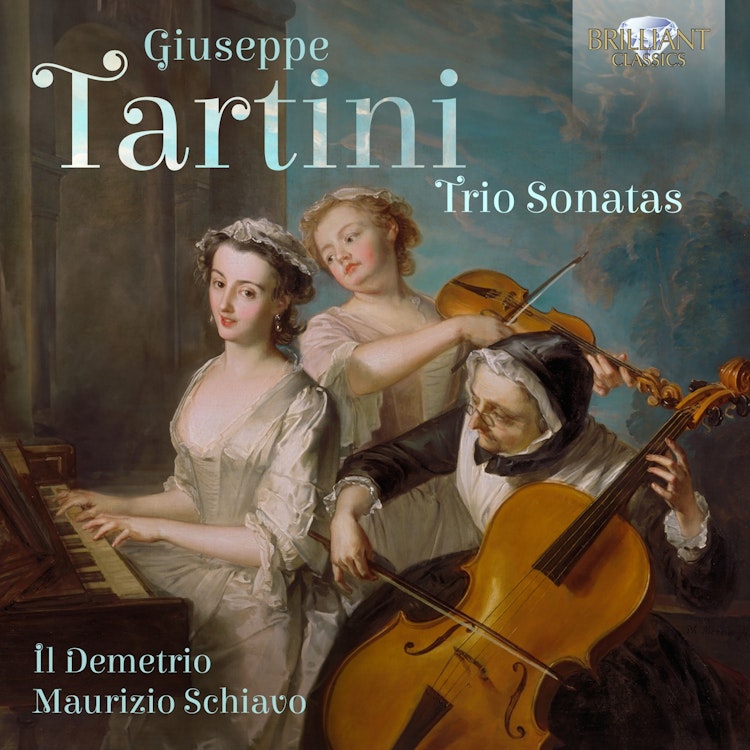
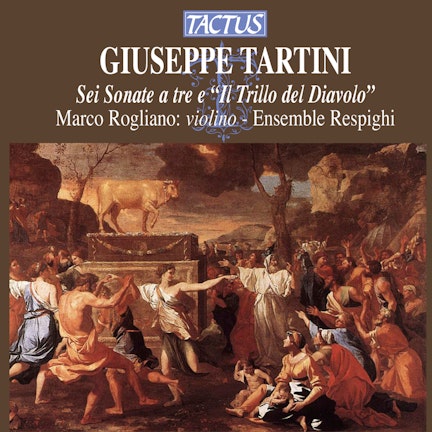
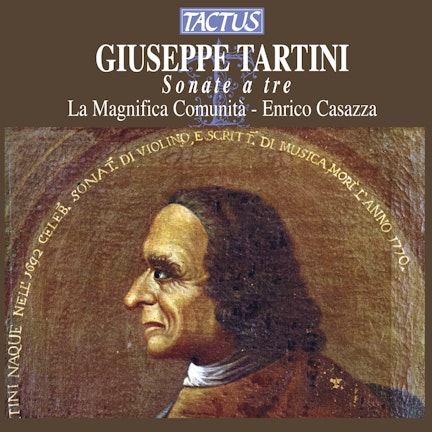
Giuseppe Tartini, a violin virtuoso, composer, teacher, and music theorist, opened his own violin school in Padua around 1727, which became known as the 'School of Nations' and was the most influential in Europe after Corelli's.
Composer's Artistic Vision
Giuseppe Tartini is credited with the discovery of combination tones, or 'Tartini tones,' in 1714, which he later theorized in his 1754 work, 'Trattato di musica secondo la vera scienza dell'armonia'.
Compositional Technique
The style of Giuseppe Tartini's trio sonatas, corresponding to his final compositional period, is characterized by a trend towards simplicity, lacking virtuoso passages, featuring binary form, regular phrasing, and a slow harmonic rhythm.
Composition History
Despite Giuseppe Tartini being the most important Italian composer of his generation for trio sonatas, only about 20% of his 37 confirmed trio sonatas had been recorded as of 2022, and a critical edition was yet to be published.
Recording & Production
This album is the first and only initiative to produce comprehensive recordings of Giuseppe Tartini's trio sonatas, utilizing advance materials from the upcoming Edizione Nazionale delle Opere di Giuseppe Tartini.
Composition History
Giuseppe Tartini's production of trio sonatas began in his late-mature years, influenced by an arm injury in 1740 that curtailed his virtuoso career and a fire in 1749 at the Basilica di Sant'Antonio that interrupted concert activities.
Performer Biography
Il Demetrio, founded by Maurizio Schiavo, specializes in baroque music and is known for its musicological research and for performing hitherto unknown works of the Italian repertoire.
You might also enjoy...
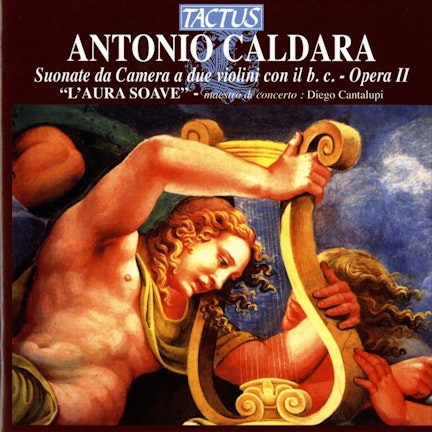
Caldara: Suonate da Camera a due violini con il b.c. - Opera II