Tchaikovsky often concentrated on a single dominant psychological motif from the lyric, giving it a suitable musical intonation.
Composer's Artistic Vision
Tchaikovsky admired Russian predecessors like Aleksandr Alyabyev, Aleksandr Varlamov, and Aleksandr Gurilyov, and learned from Mikhail Glinka, the 'godfather of an independent classical music tradition in Russia,' and Aleksandr Dargomyzhsky.
Composer Biography
Tchaikovsky even wrote some of his own poems under the pseudonym N.N. and set them to music.
Compositional Technique
Tchaikovsky's Romances often feature a distinct postlude, which serves as a musical closing thought, summarizing what the composer considered most important.
Composer's Artistic Vision
Tchaikovsky's songs, called 'Romances' in Russian, were intended to express emotions directly and simply, making them accessible to all listeners.
Performer Biography
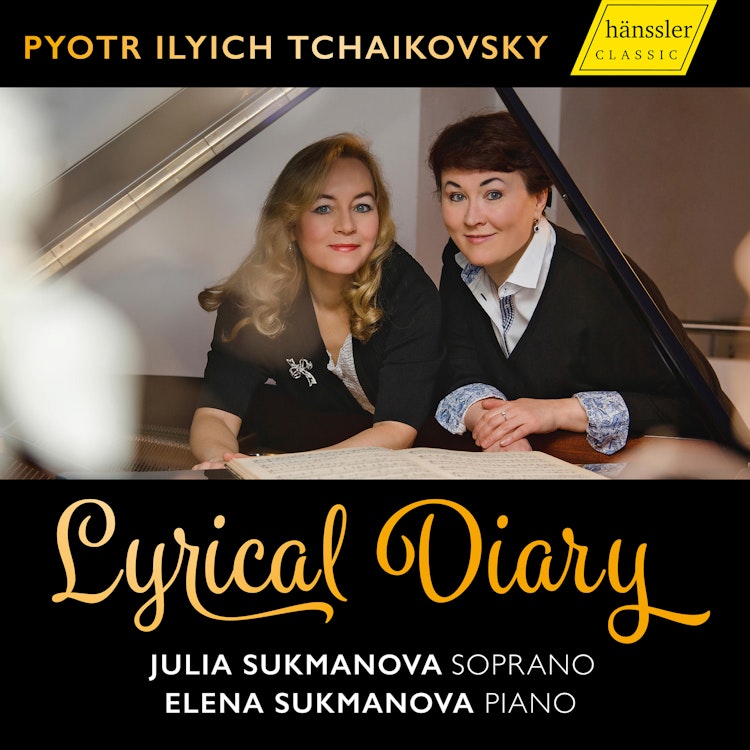
Soprano Julia Sukmanova, who performs on this album, initially trained as a concert pianist, chamber musician, and lied accompanist at the St Petersburg Conservatory.
Composer's Artistic Vision
Tchaikovsky described the poet Afanasy Fet as a 'poet-musician, who in his best moments goes beyond the bounds of poetry to achieve music itself.'
You might also enjoy...
Vincenzo D'Annibale: A'luna
Songs of the Clown
À deux voix
LE DOUX APPEL: MÉLODIES OF CHARLES-MARIE WIDOR
Sinigaglia: Lieder e romanze
Dans notre nuit
Luna clara
En fugl synger et sted
Elisabeth Grümmer Sings Mozart, Schubert, Brahms & Wolf
Arias
Les Blasphèmes: Mélodies fin-de-siècle
Shostakovich, Kabalevsky & Mussorgsky: Vocal Works