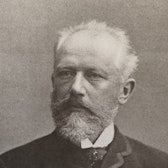
The idea for Tchaikovsky to compose orchestral suites was inspired by the German composer Franz Lachner, who attempted to revive the genre in the 1860s.
Compositional Technique
The Scherzo burlesque in Suite No. 2 uniquely features four accordions in the orchestra, which Tchaikovsky noted were 'strongly recommended without being compulsory' for the piece's success.
Compositional Technique
The Miniature March in Suite No. 1 is notable for its instrumentation using bright timbres like woodwinds, triangle, campanelli, and violins, and is seen as a precursor to parts of The Nutcracker.
Composer Biography
Tchaikovsky composed Suite No. 1 after overcoming a severe psychological crisis following his failed marriage in 1877, making the period one of his most productive.
Composer's Artistic Vision
Tchaikovsky's orchestral Suites, including those on this album, are considered pure music with objective inspiration, demonstrating his capability in this style.
Composition History
Suite No. 1 was originally planned with five movements, but Tchaikovsky added a sixth, the Divertimento, to avoid monotony from all binary rhythms.
Performer Biography
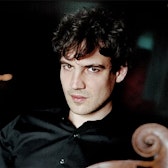
Victor Julien-Laferrière, the conductor of Orchestre Consuelo, won the First Prize at the Queen Elisabeth Competition in 2017, the first year dedicated to the cello.
You might also enjoy...
Tchaikovsky: Suites No. 3 and No. 4, 'Mozartiana'
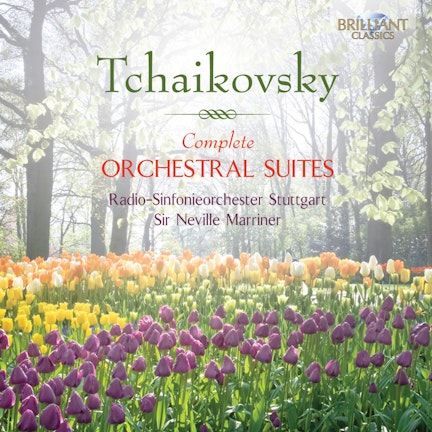
Tchaikovsky: Complete Orchestral Suites
Shostakovich: Film Music, Vol. 2 - Golden Mountains / The Gadfly / Volochayev Days
Tchaikovsky: Suites Nos. 3, 4
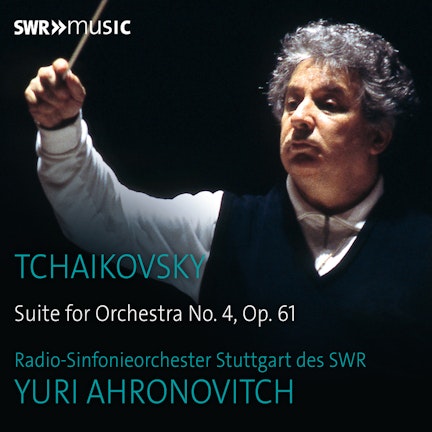
Yuri Ahronovitch conducts Tchaikovsky Suite No. 4 for Orchestra