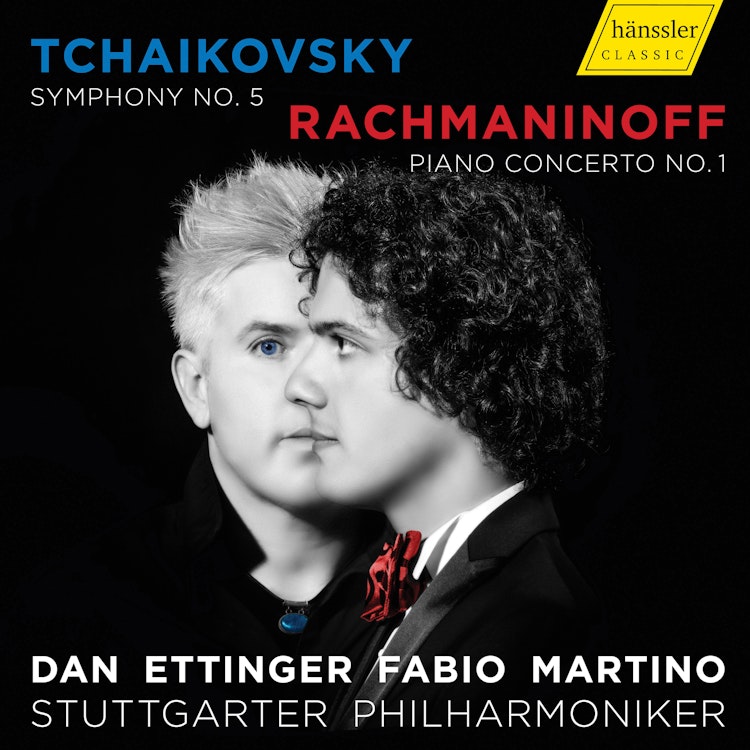
Tchaikovsky: Symphony No. 5 in E Minor - Rachmaninoff: Piano Concerto No. 1 in F-Sharp Minor
9/6/2019, 7 Tracks, 1:17:06
Featuring
Fabio Martino
Dan Ettinger
Stuttgarter Philharmoniker
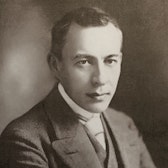
Sergei Rachmaninoff
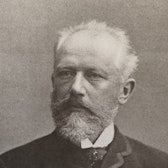
Pyotr Ilyich Tchaikovsky
Did you know?
1/7
Recording & Production
The Stuttgart Philharmonic received the 'Prix Rachmaninoff 2006' from the composer's grandson for their concert cycle featuring all of Rachmaninoff's symphonies, piano concertos, and other orchestral works.
Critical Reception
Tchaikovsky's Symphony No. 5 was initially well-received internationally, helping establish the composer's reputation, but its reception in Germany changed significantly after World War I.
Composition History
Rachmaninoff revised many of his works, sometimes multiple times; only his Second Piano Concerto exists in a single version.
Compositional Technique
The 1917 revision of Rachmaninoff's Piano Concerto No. 1 includes completely new material, such as a long tutti in the first movement's development and new codas, significantly altering its overall effect.
Critical Reception
Theodor W. Adorno, a German philosopher and music critic, famously dismissed the slow movement of Tchaikovsky's Fifth Symphony as 'film music,' equating it with kitsch.
Critical Reception
Later in the 20th century, critics began to denigrate the finale of Tchaikovsky's Fifth Symphony, with Nicholas Temperley calling it 'blaring and vulgar' in the 1980 New Grove Dictionary.
Composition History
Rachmaninoff's Piano Concerto No. 1 exists in two distinct versions, composed 26 years apart, with the first completed when he was an 18-year-old student in 1891.
You might also enjoy...
Franck: Symphony in D Minor & Symphonic Variations for Piano & Orchestra
Franck: Symphony in D Minor; Symphonic Variations
Franck: Symphony in D minor; Variations Symphonique
Franck: Symphony in D minor . Symphonic Variations
Franck: Symphony in D Minor, FWV 48 & Symphonic Variations, FWV 46
ARSM II, Vol. 17. Scriabin
Franck: Symphony in D Minor & Symphonic Variations