Later in his career, Tcherepnin viewed his work as a composer as a mission, stating, "to serve the community by art is to guide the community, just as a priest guides his congregation."
Compositional Technique
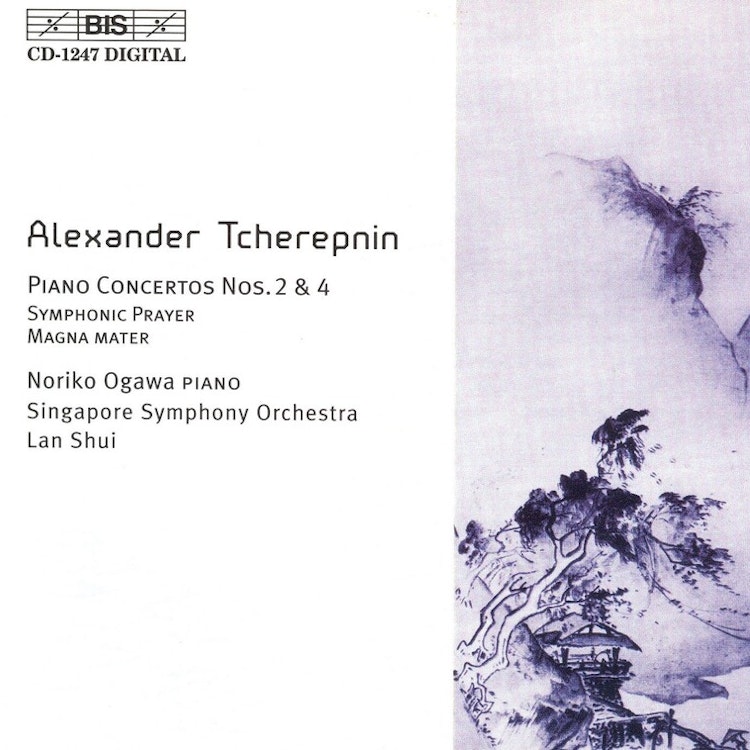
Tcherepnin's Piano Concerto No. 2 features a major/minor ambivalence, such as G minor with a major third (B natural), which is characteristic of his style.
Composer Biography
Alexander Tcherepnin's family fled revolutionary unrest in St. Petersburg in 1918, eventually emigrating to Paris in 1921, a hub of neo-classical modernity.
Composer's Artistic Vision
Tcherepnin found inspiration in folk music, including Georgian and Chinese folklore, viewing it as a "genuine recuperation" from the complexities of modernism.
Composer's Artistic Vision
Alexander Tcherepnin's musical language incorporated unique six- and nine-note scales, which were essential features of his compositions.
Composer's Artistic Vision
Tcherepnin sought reduction and constructive procedures in his music, influenced by figures like Ravel and Stravinsky, and held anti-Wagnerian and anti-Impressionist inclinations.
Performer Biography
Noriko Ogawa, the pianist on this recording, was awarded third prize in the 1987 Leeds International Piano Competition and is a national celebrity in her native Japan.
You might also enjoy...
Stravinsky: Concerto for Piano & Winds/Ebony Concerto/Capriccio/Movements
Stravinsky: Orchestral Works
Tansman: Piano Concertino - Stele in memoriam Igor Stravinsky - Piano Concerto for the Left Hand
Stravinsky: Works for Winds
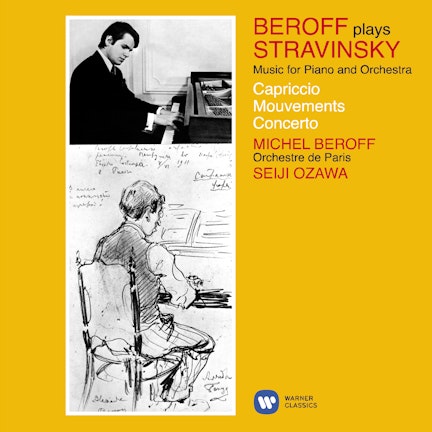
Stravinsky: Music for Piano and Orchestra (Capriccio, Movements & Concerto)
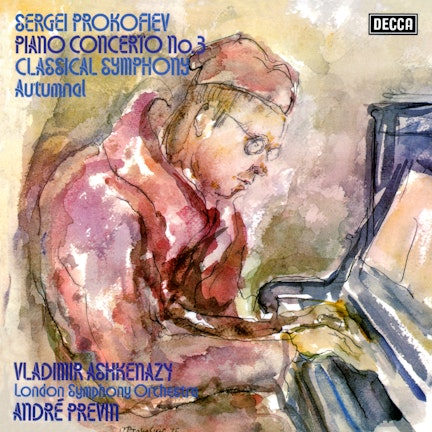
Prokofiev: Piano Concerto No.3; Classical Symphony; Autumnal
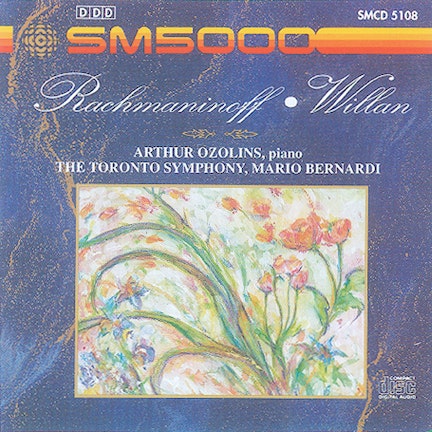
Rachmaninov / Willan: Piano Concertos
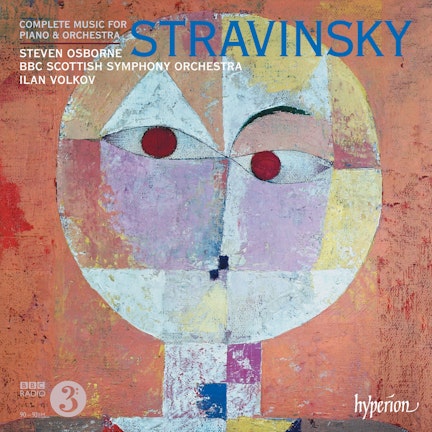
Stravinsky: Complete Music for Piano & Orchestra
Huber, K.: Tenebrae / Chamber Concerto, "Intarsi" / Protuberanzen / James Joyce Chamber Music
Turina: Canto a Sevilla
Stravinsky: Concerto for Piano and Wind Instruments; Ebony Concerto; Symphonies for Wind Instruments; Octet for Wind Instruments
Wilson: Piano Concerto & Introit
Rubinstein: Piano Concerto No. 1 in E Minor, Op. 25 & Don Quixote, Op. 87