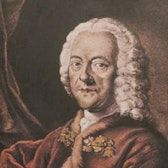
Georg Philipp Telemann, who played many instruments including the bassoon, composed numerous solo works for the instrument, with the most important ones featured on this recording.
Interpretation
The performers on this album have refashioned their techniques by combining historical sources with modern instrumental usage, particularly focusing on historical reeds and fingerings for oboes and bassoons.
Composition History
Telemann's collection Der getreue Music-Meister (The Faithful Music Master), published in bi-weekly leaflets from 1728-1729, included sonatas for various instruments, including the bassoon.
Historical Context
French cultural and musical influences spread to German courts at the end of the 17th century, largely due to French Huguenots exiled after the revocation of the Edict of Nantes by Louis XIV.
Compositional Technique
The evolution of woodwind instruments in the early 18th century, following French instrument-making principles, led to a modified bore and extended upper range, enabling more homogeneous sound and virtuoso playing.
Instruments
Early 18th-century French bassoons were constructed from multiple pieces of wood and tuned about a full tone lower than modern tunings, differing by a minor third from the German Fagott or Dulcian.
Instruments
The bassoon's extended range in the 18th century allowed it to reach the G in the middle of the treble clef, giving it a nearly three-octave range from low B flat, covering alto, tenor, and bass registers.
You might also enjoy...
Florilegium - Telemann: Essercizii Musici
Carl Philipp Emanuel Bach: Triosonaten
Bach: Sonatas & Trios
Händel: Cantatas and Trio Sonatas
Handel: Trio Sonatas / Tra Le Fiamme / Notte Placida E Cheta
Rameau: Le Berger Fidèle, Thétis & pièces en concerts