Telemann taught himself to play various instruments, including oboe, transverse flute, viola da gamba, double bass, and trombone, to compose music well-suited to each instrument.
Performer Biography
Clas Pehrsson, the principal recorder teacher at Stockholm College of Music since 1965, was a founder of the Association of Swedish Recorder Teachers and has served as a juror at international recorder competitions.
Historical Context
During the late Baroque era, the recorder did not hold a strong position; its parts were often played by other musicians, such as oboists, and many recorder sonatas were written for amateurs.
Composition History
Telemann's collection "Der getreue Musikmeister" (1728) is likely the earliest example of a musical pedagogy work issued as a serial, available by subscription.
Recording & Production
To fill the CD, the performers added works from "Der getreue Musikmeister" with unspecified instrumentation, using various recorders and a gamba in the continuo.
Instruments
The recording features various historical recorders, including a voice-flute (tenor in D'), fourth-flute (soprano in B flat'), and sixth-flute (soprano in D"), alongside a treble recorder.
Composer Biography
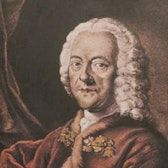
Georg Philipp Telemann (1681–1767), once considered a minor Baroque master, is now recognized as one of his era's most significant composers.
You might also enjoy...
Handel: 20 Sonatas, Op. 1
Telemann: Recorder Concertos Nos. 1-4
Georg Philipp Telemann: Concertos for Flute & Harpsichord
Quantz: Flute Sonatas
Telemann: Complete Sonatas for Recorder & Basso Continuo
Georg Philipp Telemann: 4 Concerti for Flute, Harpsichord & b.c.