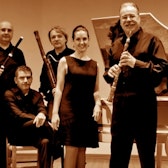
A notable feature of Telemann's cantatas is the interchangeability of instruments and vocal lines, making them performable by various ensembles.
Composition History
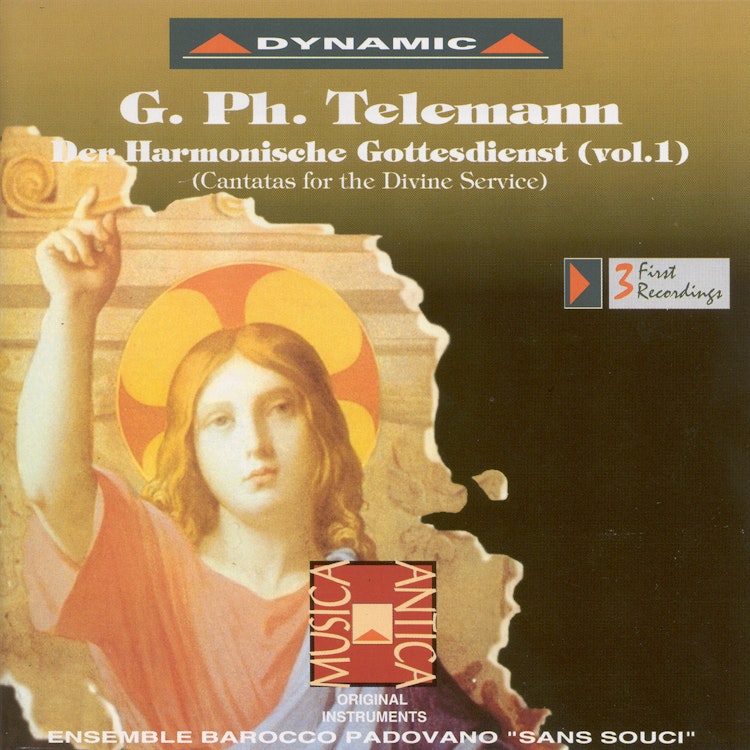
Telemann's Harmonischer Gottes-Dienst, published in Hamburg in 1725-26, and its continuation, Fortsetzung des Harmonischen Gottesdienstes (1731-32), comprise about 140 sacred chamber cantatas.
Critical Reception
Though esteemed by his contemporaries, Telemann was largely ignored by 19th-century musicology, which favored Bach, and was only rediscovered in the 20th century.
Composer Biography
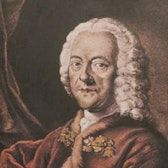
George Philipp Telemann (1681-1767) was an extremely prolific composer, active in many musical genres, and also worked as a theorist, publisher, and impresario.
Composer's Artistic Vision
Telemann intended his Harmonischer Gottes-Dienst cantatas for both church use and family worship, catering to households with devotional sensibility and musical ability.
Composer Biography
Telemann wrote three autobiographies, an unusual practice for his time, with two of them published by Mattheson in 1731 and 1740.
Historical Context
The unique quality of these German-language cantatas lies in their Italian origins, as the poet and theologian Erdmann Neumeister transferred the Italian chamber cantata text form to sacred cantatas around 1700.
You might also enjoy...
Bach Cantatas No. 54, 82, 170
Bach, J.S.: Cantatas - Bwv 51, 54, 82, 199
J. S. Bach: Weichet nur, betrübte Schatten, BWV 202