In the 17th and 18th centuries, composers began incorporating instruments previously used only in popular music or for specific functions, like the hunting horn, into classical music to create evocative soundscapes.
Performer Biography
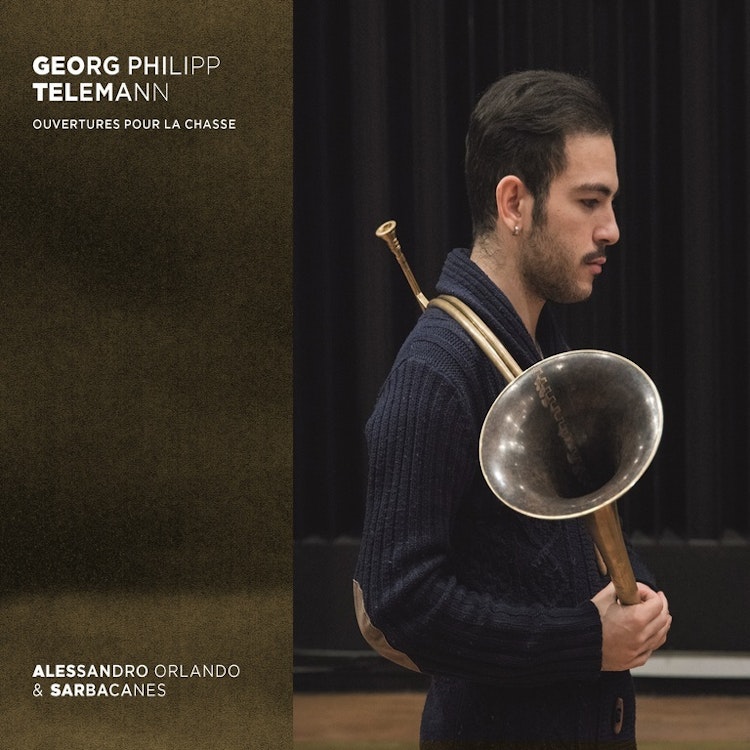
Alessandro Orlando, a horn player on this album, dedicated himself to historic instruments from 2010 and has collaborated with renowned professional Italian orchestras like Accademia Montis Regalis.
Interpretation
The Sarbacanes ensemble on this recording deliberately chose scores that do not stipulate a continuo instrument, allowing them to explore a more flexible tuning system, free from keyboard temperament.
Compositional Technique
Telemann's Overtures on this album are singular compositions that interweave characteristic hunting horn fanfares with refined counterpoint for double reeds.
Recording & Production
The horn players on this recording use copies of large Leichamschneider horns, made by Egger in Basel, which are less tightly coiled than later orchestral instruments and offer greater ease of sound emission.
Composition History
Telemann's Overtures on this album were likely composed as entertainment for Landgrave Ludwig VIII of Hesse-Darmstadt, who was known as the "Hunting Landgrave" due to his passion for hunting.
Instruments
The hunting horn, used for centuries to deliver outdoor signals, gradually evolved from animal horn to wood and then hammered metal, always retaining its conical bore for dynamic range.
You might also enjoy...
Schiff, D.: Sacred Service Suite / Divertimento From Gimpel the Fool / Scenes From Adolescence
Reza Vali: The Book of Calligraphy
Beethoven: Early Wind Music
Contemporary Danish Accordion Music
Benda: Violin Sonatas
The Roaring '20s
Heinz Holliger at the Opera
Concerti di Napoli
Chamber Music Palm Beach: True Colors
Chamber Music (Bohemian and Hungarian) - Dvorak, A. / Brahms, J. / Liszt, F. / Farkas, F. / Smetana, B.
Rampal & Kudo Play Telemann, Kuhlau, Bach, Mozart & Doppler