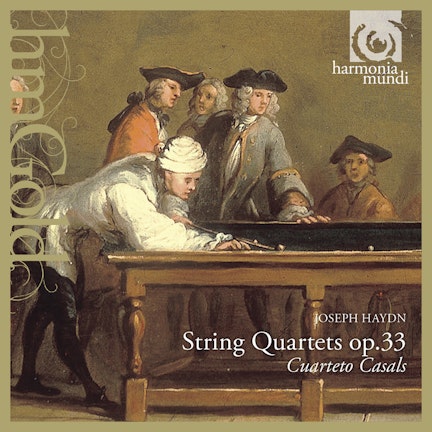
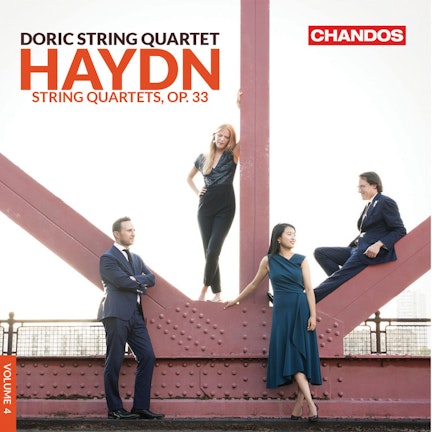
Haydn's Op. 33 quartets show the influence of opera, particularly opera buffa, by allowing each instrument to 'sing' and by incorporating dramatic surprises.
Composition History
Haydn declared these string quartets were 'composed in an entirely new and special way' because he had not composed any for ten years.
Compositional Technique
Haydn's Op. 33 quartets are nicknamed 'Gli Scherzi' (The Jokes) because he replaces the traditional minuet with a scherzo, often with a dance-like character in disguise.
Compositional Technique
The finale of the C major quartet in Op. 33 is based on a jaunty Bosnian or Dalmatian folksong, giving it a vocal inspiration.
Critical Reception
The composer Johann Friedrich Reichardt, a contemporary of Haydn, praised the Op. 33 quartets for their 'genial good humour and the most lively and appealing wit'.
Composer Biography
The ten-year gap between Haydn's Op. 20 and Op. 33 quartets allowed him to gain essential experience composing symphonies, his first oratorio (Il ritorno di Tobia), and several operas as Kapellmeister.
Cultural Impact
Haydn's Op. 33 quartets had an exceptional impact on his contemporaries, inspiring composers like Mozart to write their own quartets, six of which Mozart dedicated to Haydn.