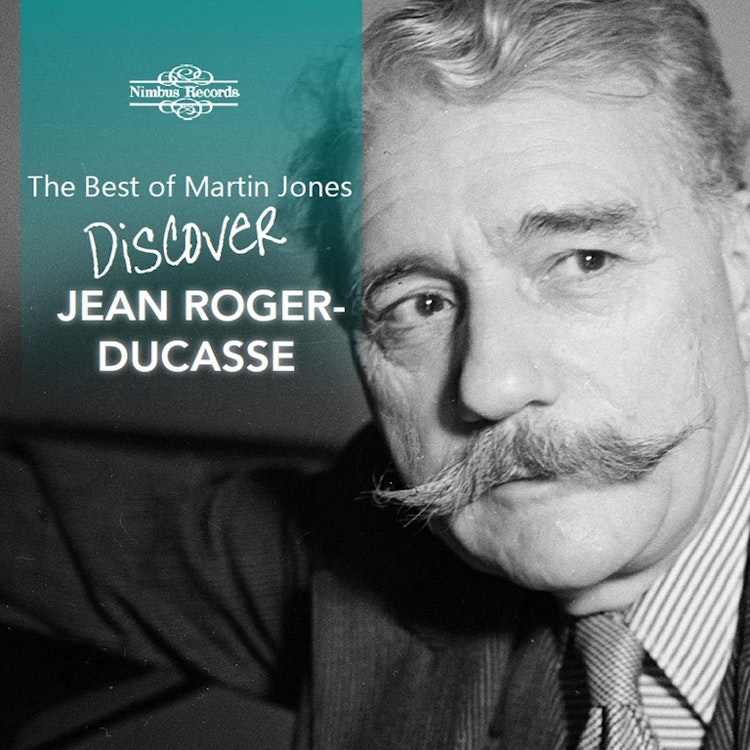
The Best of Martin Jones: Discover Jean Roger-Ducasse
3/6/2026, 13 Tracks, 1:12:30
Featuring
Martin Jones
Jean Roger-Ducasse
Did you know?
1/7
Composition History
Roger-Ducasse studied at the Paris Conservatoire with Gabriel Fauré, whose Requiem he later arranged for piano reduction.
Composer's Artistic Vision
Unlike many contemporaries, Roger-Ducasse's piano music avoids visual or poetic references, focusing on 'pure' music, often complex, densely written, and highly dissonant.
Composer Biography
Jean Roger-Ducasse, born into a wealthy family in Bordeaux, received a good education, studying Latin, Greek, and French literature, and showed musical talents early on.
Compositional Technique
Roger-Ducasse's piano music is considered among the most difficult in the repertoire, requiring a greater than average hand span and the ability to play rapid chords and passing notes simultaneously.
Historical Context
Roger-Ducasse's marginalization as a composer may be partly due to the explosion of Modernism in Paris, with the rise of composers like Ravel and Debussy, and the arrival of Stravinsky's ballets.
Critical Reception
Despite positive reviews during his lifetime, including an article in The Musical Times praising his combination of classical and impressionistic techniques, Roger-Ducasse's work fell into obscurity.
Composer Biography
Roger-Ducasse's composition classmates at the Paris Conservatoire included notable figures like Maurice Ravel, Florent Schmitt, Charles Koechlin, Nadia Boulanger, and Georges Enesco.
You might also enjoy...
British Music for Piano Duo
Amy Beach - Under The Stars - The Solo Piano Music Of Amy Beach, Volume Two
La Valse, 1880-1920
19 Piano Etudes
De Séverac: En languedoc, Cerdana, Baigneuses au soleil
Shaporin: Complete Piano Music
Saint-Saens, C.: Piano Duos, Vol. 1 - Suite Algerienne / Variations On A Theme of Beethoven / Scherzo
Piano Recital: Labe, Thomas - Bach, J.S. / Godowsky, L.
Poulenc
Poulenc: Piano Melodies
Götterdämmerung
Rarieties of Piano Music from the 2021 Festival at Schloss vor Husum (Live)