Giovanni Battista Bononcini, a composer on this album, introduced technical innovations for the cello, including a uniform tuning of C-G-d-a and incorporating violin and viola da gamba techniques.
Instruments
The term "violoncello" first appeared in 1665 with the publication of Giulio Cesare Arresti's Sonata Op. IV in Bologna.
Critical Reception
The composer Tartini called Francesco Geminiani "il Furibondo" (the madman), possibly due to his limitless rhythmic wealth and often daring harmonic structures.
Composer Biography
Domenico Gabrielli, a brilliant cellist and composer featured on this album, was dismissed from his post as first cello for indiscipline but was re-engaged due to his indispensable talent.
Instruments
Around 1660, the violoncino, a smaller bass instrument, was improved by winding a silver thread around the gut of its two bass strings, creating "spun strings" for a richer sound.
Composer's Artistic Vision
Francesco Geminiani, a composer on this album, stated that the intention of music is not only to please the ear but also to express sentiments, strike the imagination, affect the mind, and command the passions.
Cultural Impact
Vivaldi's Sonata No. 5 in E minor from this collection became his most popular 'cello concerto' after being transformed into a concerto by Vincent d'Indy and Paul Bazelaire, and popularized by Pierre Fournier.
You might also enjoy...
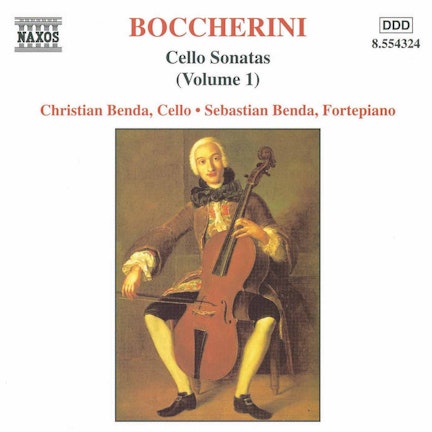
Boccherini: Cello Sonatas
Boccherini: Cello Sonatas
Boccherini: Sonate per il violoncello, Vol. 2
Antonio Vivaldi: Complete Cello Sonatas
Cello Music - Vivaldi, A. / Geminiani, F. (Sonatas for Violoncello and Basso Continuo)