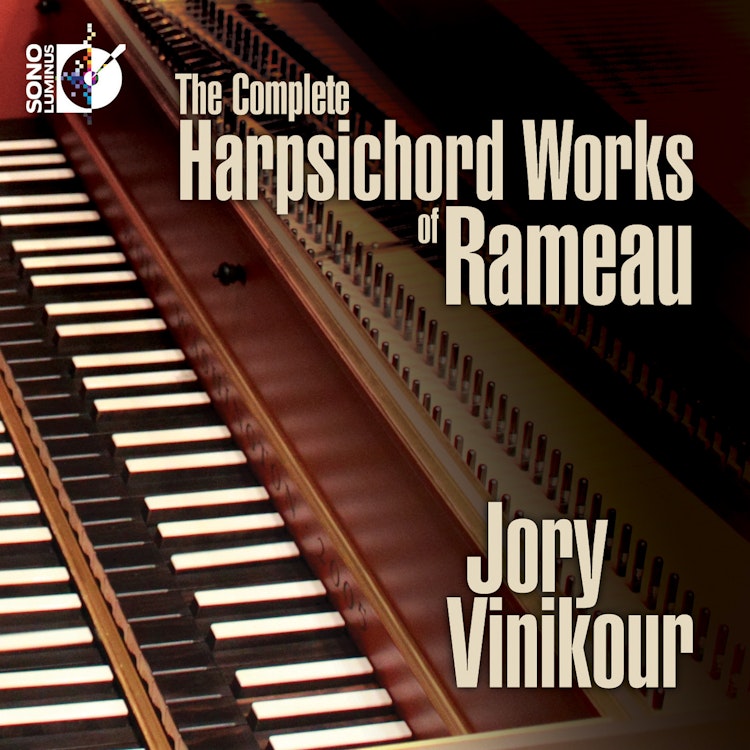
The harpsichord used for this recording is a double-manual French harpsichord, built in 2005 by Thomas and Barbara Wolf, modeled after a 1707 instrument by Nicolas Dumont, a significant Parisian maker.
Composition History
'La Dauphine' is believed to be the last harpsichord piece written by Rameau, likely in 1747, and is thought to be his notation of an improvisation for a royal marriage.
Composer Biography
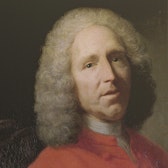
Jean-Philippe Rameau, the composer, established himself as France's foremost operatic composer at the advanced age of 50 with his first opera, Hippolyte et Aricie, in 1733.
Compositional Technique
In 'Les Cyclopes,' Rameau uses a technique called 'battéries,' where one hand repeats the note the other has just played, evoking the Cyclops' hammers, and considered himself its inventor.
Composer's Artistic Vision
Rameau's harpsichord works are considered among the most important in 18th-century French keyboard repertoire due to his musical and harmonic ingenuity and unique approach to the instrument.
Composition History
Rameau waited eighteen years to publish his second collection of harpsichord pieces, 'Pièces de Clavessin' (1724), after his first publication in 1706.
Compositional Technique
The piece 'Les Trois Mains' aims to create the illusion of three hands playing simultaneously, a technique Rameau considered his own original creation.