Spanish court music during Columbus's time, unlike Franco-Flemish polyphony, was typically homophonic, often three-part, and characterized by delicate simplicity in both text and music.
Album & Artwork
The album's cover features a portrait of Christopher Columbus by Sebastiano del Piombo, painted in 1519.
Compositional Technique
The Franco-Flemish school's music, represented by Mabrianus de Orto and Alexander Agricola, is characterized by uninhibited rhythmic invention, virtuoso vocal writing, and polyphonic textures around a cantus firmus.
Historical Context
This recording explores music Christopher Columbus might have heard during his life, which included extensive time on dry land, not just his famous voyages.
Composition History
The album includes works by Mabrianus de Orto and Alexander Agricola, two distinguished composers whose music Christopher Columbus likely heard.
Historical Context
Ferdinand and Isabella, the Catholic Monarchs who supported Columbus, maintained two separate musical households that primarily featured secular music in the vernacular.
Historical Context
Christopher Columbus's last voyage ended in 1504, and he died three months before composer Alexander Agricola, whose music he likely heard.
You might also enjoy...
Dufay, G.: Vocal Music
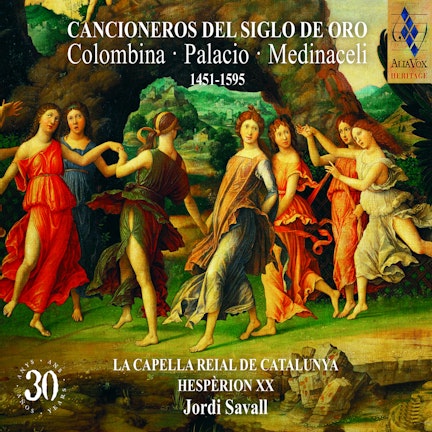
Cancioneros del Siglo de Oro (Colombina- Palacio- Medinaceli 1451-1595)
Christmas Lullaby
Christmas Lullaby
Organ Plus with WJ
Mehr als Worte sagt ein Lied
Mehr als Worte sagt ein Lied
Bach Arcades
BACHArkaden
A Baroque Christmas
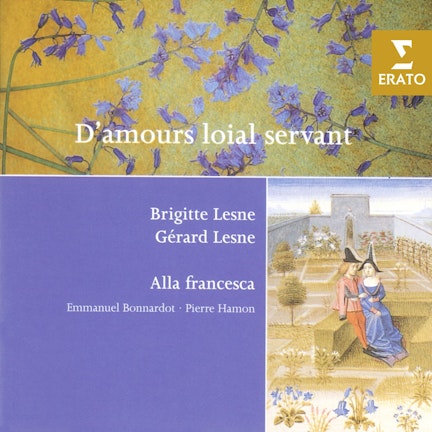
D'Amours loial servant - French and Italian Love Songs of the 14th-15th Centuries