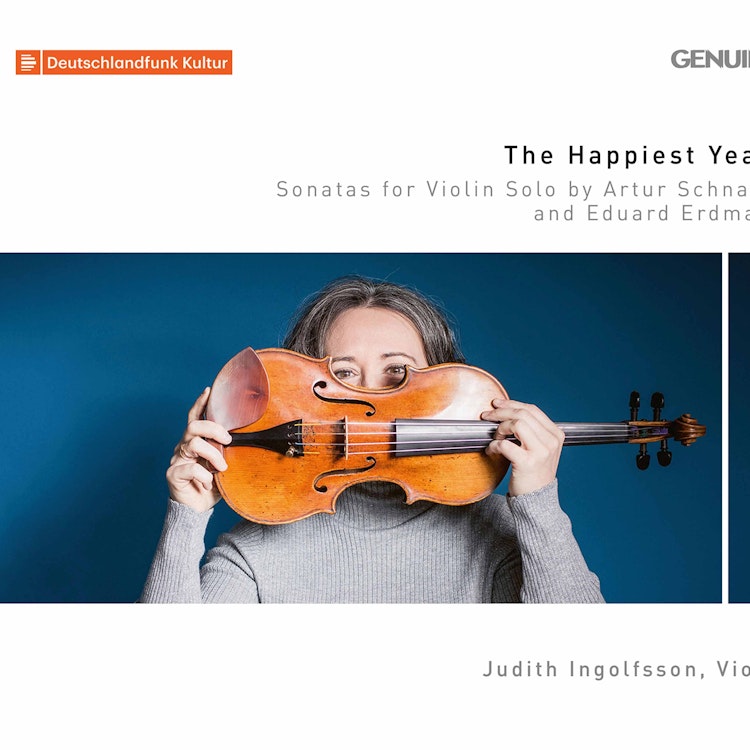
The album's title, 'The Happiest Years,' refers to Artur Schnabel's musically stimulating and happy period in Berlin from 1919 to 1924, despite the turbulent atmosphere in post-WWI Berlin.
Compositional Technique
Artur Schnabel's Sonata for Solo Violin is written in an atonal, freely chromatic idiom, features five movements, and notably lacks bar lines, with a profusion of performance directions.
Performer Biography
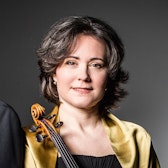
Judith Ingolfsson, the violinist on this album, plays a Lorenzo Guadagnini violin from 1750.
Composer's Artistic Vision
Artur Schnabel composed his Solo Violin Sonata to free violinists from needing to play 'minuetlet'-like arrangements and from relying on accompanists.
Composer's Artistic Vision
Artur Schnabel, a great pianist, considered composing a 'hobby, or love affair' and was more interested in the 'activity' of composing than the 'value' of his compositions.
Notable Performances
The young Australian violinist Alma Moodie, described by her teacher Carl Flesch as his favorite pupil, premiered Eduard Erdmann's Sonata for Violin Solo, Op. 12 in Berlin in 1921.
Composer Biography
Eduard Erdmann, a composer and pianist, was described as a very large man with long arms, huge angular shoulders, and abnormally large hands, considered highly gifted but eccentric.
You might also enjoy...
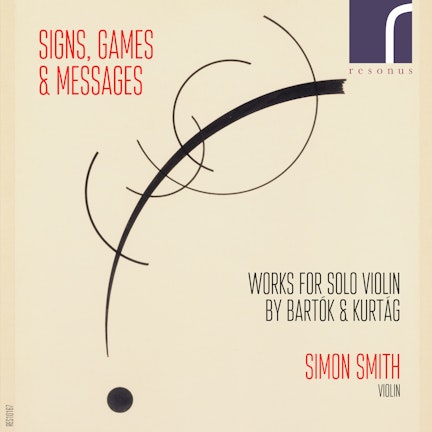
Signs, Games & Messages: Works for Solo Violin by Bartók & Kurtág