Puccini's second opera, Edgar, was a disaster at its 1889 premiere at La Scala, and even a revised three-act version did not fare much better.
Compositional Technique
Amilcare Ponchielli's 'Dance of the Hours' from La Gioconda is a ballet that mirrors the passing of time from dawn to night, dramatizing the conflict between darkness and light.
Compositional Technique
Giuseppe Verdi's Prelude to Act III of La traviata uses tremulous strings to evoke a sick room, pizzicato basses for ticking time, and woodwinds to suggest sacrifice, demonstrating music's expressive power.
Composer Biography
Giacomo Puccini studied composition with Amilcare Ponchielli in Milan in the 1880s, and Ponchielli served as an operatic role model for Puccini.
Composer's Artistic Vision
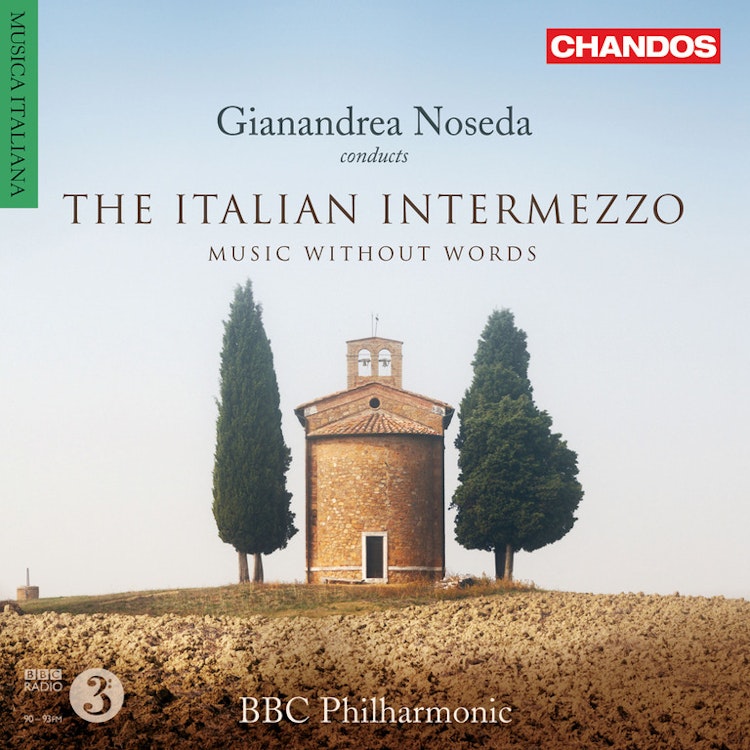
The album explores the rise of orchestral intermezzos and preludes in Italian opera, which allowed music to comment on the action and paint scenes without words.
Compositional Technique
The Intermezzo from Ruggero Leoncavallo's I Pagliacci is distinctly Wagnerian, with dark descending chords hinting at a funeral march and high strings suggesting Brünnhilde, before transitioning to the melody of 'Vesti la giubba'.
Composer Biography
Alfredo Catalani, despite being Italian, inclined more towards German musical traditions than his native Italy.
You might also enjoy...
Zemlinsky: Lyrische Symphonie, Op. 18 & Orchestral Preludes and Interludes
Zemlinsky: Lyric Symphony etc
Zemlinsky: Der Zwerg & Opern-Vorspiele & -Zwischenspiele
Schmidt: Symphony No. 4 / Notre Dame
Schmidt, F.: Symphony No. 1 / Notre Dame, Act I: Introduction, Interlude and Carnival Music
Verdi: Preludes, Overtures & Ballet Music, Vol. 2
Mussorgsky: Pictures at an Exhibition
Wolf-Ferrari: Complete Overtures & Intermezzi
Wagner : Der Ring des Nibelungen [Excerpts]
Wolf-Ferrari: Intermezzi und Ouvertüren / Streicherserenade
Anton Rubinstein: Symphony No. 2, "Ocean" - Ballet Music from Feramors