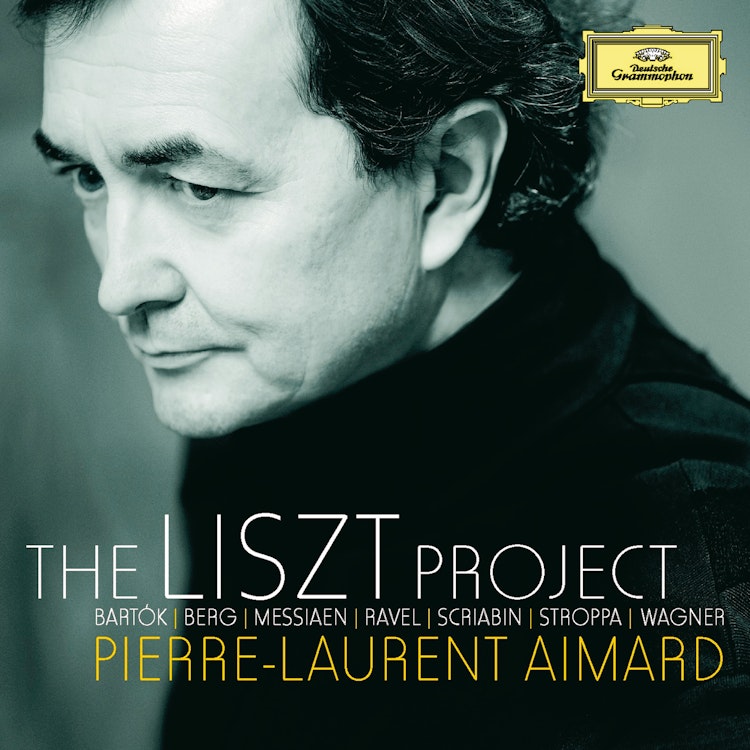
The Liszt Project - Bartók; Berg; Messiaen; Ravel; Scriabin; Stroppa; Wagner
9/9/2011, 18 Tracks, 2:26:07
Featuring
Pierre-Laurent Aimard
Franz Liszt
Richard Wagner
Alban Berg
Alexander Scriabin
Béla Bartók
Marco Stroppa
Maurice Ravel
Olivier Messiaen
Did you know?
1/6
Compositional Technique
Liszt's B minor Sonata integrates highly contrasting elements into an impressive single-movement form, creating an instrumental drama.
Compositional Technique
Liszt, Scriabin, and Messiaen all expanded music's ability to depict other sense perceptions, developing a synaesthetic vision of sound and color.
Composer's Artistic Vision
Liszt's music is characterized by a certain restlessness, stemming from his appetite for new experiences and his need to process them musically.
Interpretation
Pianist Pierre-Laurent Aimard's interpretation of Liszt's B minor Sonata avoids extremes, neither treating it as a virtuoso showpiece nor exaggerating its inherent contrasts.
Composition History
Liszt's B minor Sonata, a major work, was partly due to the persistence of Carolyne Sayn-Wittgenstein, who compelled him to compose it.
Album & Artwork
The second CD of this album is systematically structured with pairs of pieces, describing a journey from darkness into light.
You might also enjoy...
The Liszt Project - Bartók; Berg; Messiaen; Ravel; Scriabin; Stroppa; Wagner
Liszt: Piano Sonata / 2 Legendes / Gretchen
Liszt: Sonata in B Minor
Liszt: Piano Sonata, Dante Sonata & Petrarca Sonette