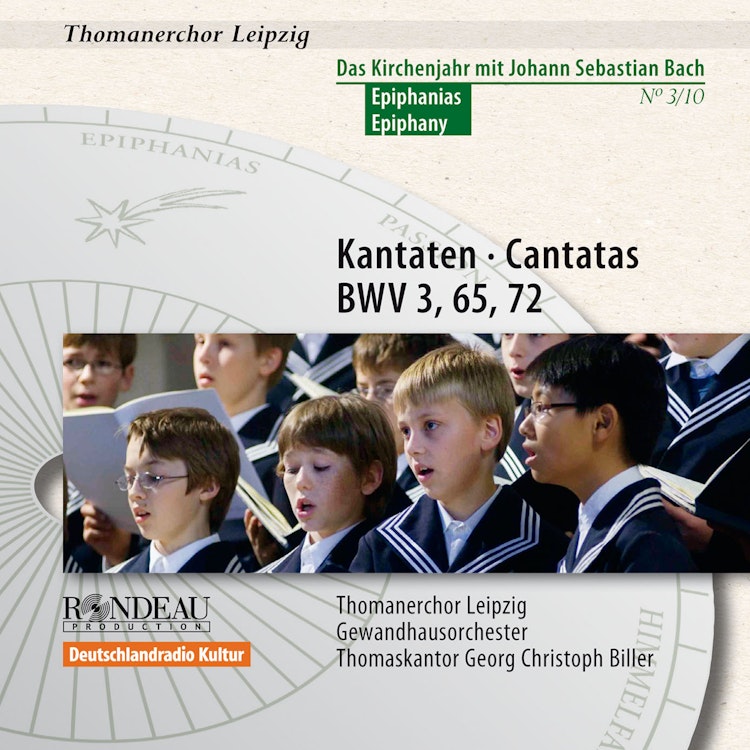
The Liturgical Year with J.S. Bach, Vol. 3: Epiphany
4/2/2013, 21 Tracks, 57:46
Featuring
Georg Christoph Biller
Gotthold Schwarz
Martin Petzold
Conrad Zuber
Martin Deckelman
Stefan Kahle
Gewandhausorchester Leipzig
Thomanerchor Leipzig
Johann Sebastian Bach
Anonymous
Did you know?
1/7
Interpretation
The cantatas on this album are presented as 'musical sermons,' interpreting and commenting on the Gospel stories rather than merely retelling them.
Composition History
Bach's weekly workload included composing a new cantata for each Sunday, or adapting an existing one, which would then be rehearsed and performed, sometimes twice on high feast days.
Notable Performances
The 'Bach-Renaissance' began in 1829 when Felix Mendelssohn Bartholdy performed Bach's St Matthew Passion for the first time since Bach's death, exactly 100 years after its premiere.
Performer Biography
The Thomanerchor Leipzig, one of the world's oldest musical ensembles with an 800-year history, has performed a Bach cantata weekly in the Thomaskirche for about a hundred years.
Cultural Impact
After his death in 1750, Bach's vast oeuvre was largely forgotten for about 80 years, as his compositions were considered outdated compared to the emerging Viennese Classical style.
Composer Biography
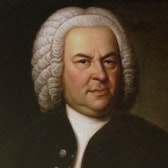
Johann Sebastian Bach, a modern artist and representative of a progressive generation of musicians, began his tenure as Thomaskantor in Leipzig on May 5, 1723.
Composer's Artistic Vision
Bach referred to his new, multi-movement cantatas as the 'Haupt Music' (main music) of the church service, distinguishing them from traditional motets, which he called 'gemeine Music' (common music).
You might also enjoy...
Bach, J.S.: Christmas Cantatas
J.S. Bach: Der Herr denket an uns, BWV 196
J.S. Bach: Christ lag in Todesbanden. Cantatas BWV 4, 106, 131