Velluti was famously flexible with tempo, speeding up and slowing down at will to dramatically illustrate a word or phrase, and would even conduct the orchestra from the stage during adventurous musical passages.
Recording & Production
The piano used in this recording is an 1893 Bechstein grand, fully restored in 2000 and re-voiced for this recording, chosen for its historical accuracy and sound quality compared to earlier fortepianos.
Critical Reception
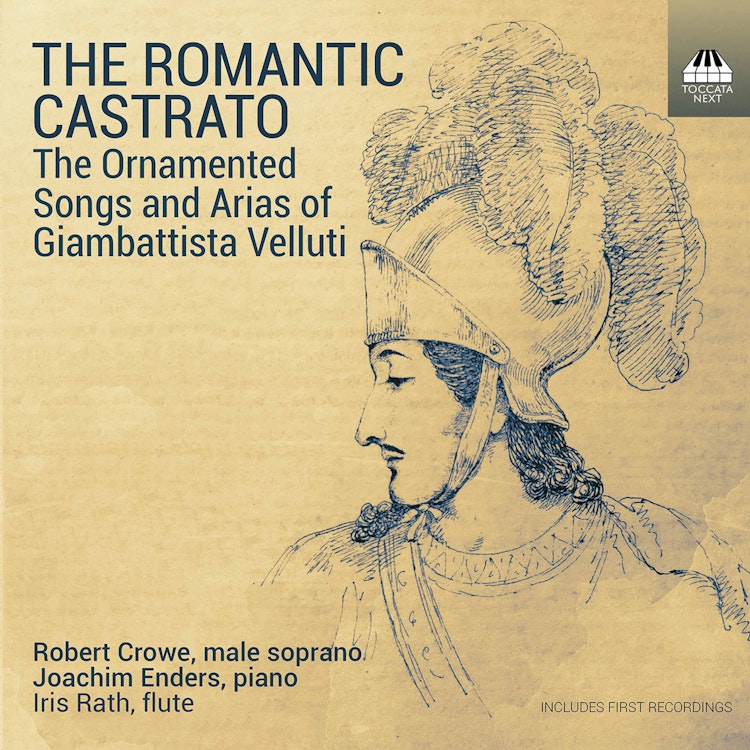
Velluti's ornamentation was considered startling, different, and daring, even though he was often seen as a relic of the departed eighteenth century.
Historical Context
Giovanni Battista Velluti, a soprano castrato, made his operatic debut in 1798 and performed almost constantly for 35 years, taking his final public bow in 1833.
Cultural Impact
Velluti was widely recognized as the last operatic castrato likely to perform publicly during his final decade of performing.
Cultural Impact
Velluti was considered by his contemporaries to be the creator of a singing style, including ornamentation, that influenced leading prime donne of the 19th century, making his repertoire a source for ornamentation in operas by Bellini, Donizetti, and early Verdi.
Compositional Technique
Velluti's ornamentation style included using extreme changes in vocal register to emphasize words with 'dark' meanings or those related to the body, such as 'morte' (death) or 'cuore' (heart).