Sinfonieorchester Basel and conductor Ivor Bolton continue their series exploring the many and varied works of Gabriel Fauré with an album devoted to his sacred vocal music. Alongside the familiar Requiem and Cantique de Jean Racine are lesser-known gems including the Messe des pêcheurs and La passion – a recently rediscovered work recorded here for the very first time. The Requiem is presented in the original version from 1900, reviving some seldom-heard instrumental passages.
Featuring
Ivor Bolton
Katja Stuber
Benjamin Appl
Balthasar-Neumann-Chor
Sinfonieorchester Basel
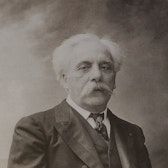
Gabriel Fauré
André Messager
Did you know?
1/6
Recording & Production
This recording of Fauré's Requiem is based on a 2011 critical edition that reincorporated forgotten instrumental passages by consulting original orchestral parts from the period.
Composition History
Fauré's Super flumina Babylonis, a setting of Psalm CXXVI, was written for an end-of-year competition in 1863 and received a "highly honourable mention."
Composition History
The Cantique de Jean Racine earned Gabriel Fauré, the composer, the first prize in composition in 1865 at the end of his eleven years of study at the École Niedermeyer.
Composer's Artistic Vision
Gabriel Fauré, the composer, stated that his Requiem was an attempt to escape the conventional liturgical music he was habitually involved with as a choirmaster and organist.
Composer Biography
Fauré, the composer, did not believe in God, which the booklet suggests might have hindered his development as a church composer.
Composer's Artistic Vision
Fauré, the composer, viewed death as a "joyful deliverance" and an "aspiration towards a happiness beyond the grave," rather than a painful experience, which influenced his Requiem.