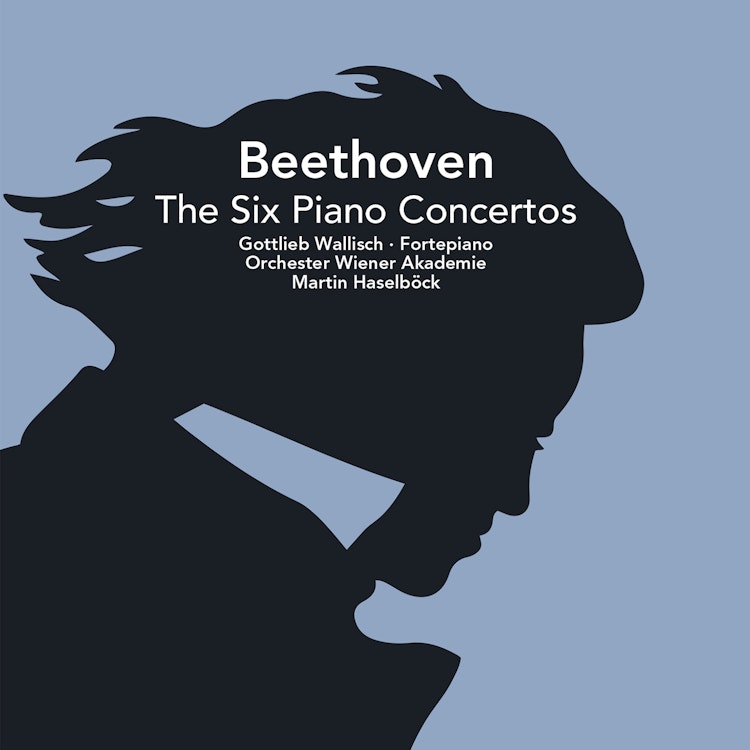
The fortepianos used in this recording, dating from around 1809, offer a special color in their registers and elegant purity, with a slightly larger volume that hints at future piano developments.
Composer Biography
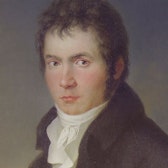
Beethoven's increasing deafness led to the end of his concert career by 1814, meaning a large portion of his piano compositions were written during his earlier period.
Compositional Technique
Beethoven's dynamic ideas, especially at the extremes, take on a different meaning on historical instruments compared to modern grand pianos, with a full fortissimo representing the maximum dramatic expression for the instrument and player.
Interpretation
The recording uses original instruments from the early 19th century, corresponding to Beethoven's later creative period, rather than copies of instruments from the time of the concert premieres.
Historical Context
During Beethoven's time, Vienna was one of Europe's two most important 'piano cities', known for its many first-rate pianists like Mozart and numerous skilled piano builders.
Instruments
Viennese pianos of Beethoven's era were lighter, more graceful, and had a brilliant, transparent sound rich in overtones, differing significantly from the heavier, darker-toned English instruments.
Recording & Production
This complete recording of Beethoven's piano concertos was made on original instruments at historical venues in Vienna, including the Eroica Hall in Palais Lobkowitz and the Festival Hall of the Akademie der Wissenschaften.
You might also enjoy...
Beethoven: Piano Concertos (Complete)
Beethoven: Complete Piano Concertos
Beethoven: Complete Piano Concertos
Beethoven: Concertos
Beethoven: 8 Concerti
Beethoven: Complete Piano Concertos
Beethoven, Piano Concertos 1-5; Choral Fantasia
Beethoven, Piano Concertos 1-5; Choral Fantasia
Beethoven: Piano Concertos Nos. 1-5 (Live)
Beethoven: The Piano Concertos
The Beethoven Journey - Piano Concertos Nos.1-5
Beethoven: Piano Concertos Nos. 1-5; Choral Fantasia