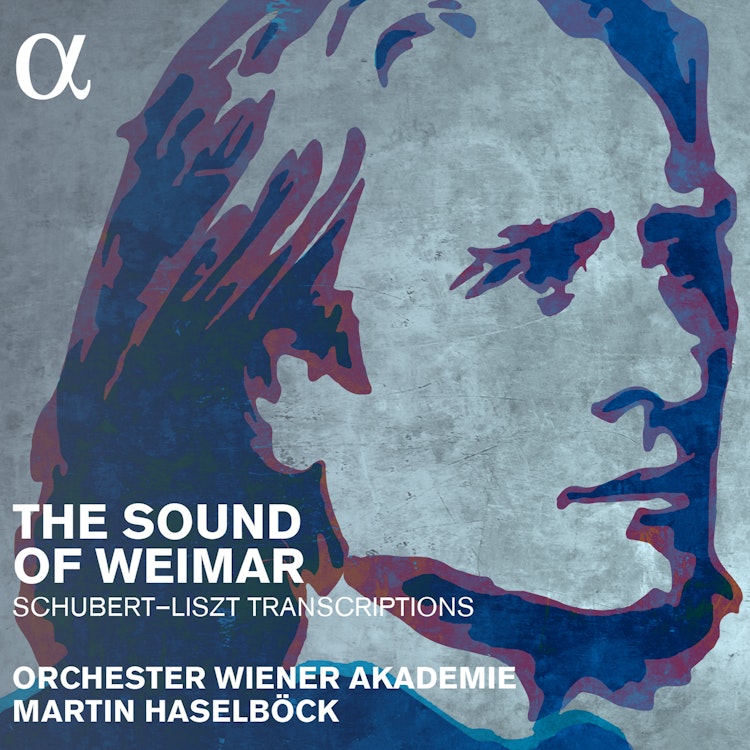
The Sound of Weimar. Schubert - Liszt Transcriptions
9/18/2015, 10 Tracks, 1:17:52
Featuring
Martin Haselböck
Gottlieb Wallisch
Orchester Wiener Akademie
Franz Liszt
Franz Schubert
Did you know?
1/7
Compositional Technique
Liszt's arrangements of Schubert's piano marches are more complex than the originals, profoundly affecting their formal structure, as evidenced by his autograph scores with corrections.
Composition History
Franz Liszt's 'Les Morts - Oraison' and 'La Notte' were composed as 'music of remembrance' following the deaths of his son Daniel and daughter Blandine, serving as a personal way to cope with his grief.
Cultural Impact
Franz Liszt's transcriptions and orchestrations of Franz Schubert's works, like the 'Wanderer' Fantasy, helped make Schubert popular and well-known, similar to how Mendelssohn popularized Schubert's 'Great C major' Symphony.
Notable Performances
The orchestral version of Liszt's 'Vexilla regis prodeunt - Kreuzeshymnus' remained unperformed in the archives until its premiere by the Orchester Wiener Akademie on October 20, 2013, in Weimar, and this CD marks its first recording.
Interpretation
Martin Haselböck, the artistic director, limits the orchestra to never more than sixty players, reflecting the size of orchestra Liszt had at his disposal, and uses historically informed musicians playing on original instruments.
Interpretation
This recording project, featuring the Orchester Wiener Akademie as 'Orchestra in residence' at the Liszt Festival Raiding, performs Franz Liszt's orchestral works on original instruments.
Recording & Production
The recording takes place in the Franz Liszt Konzerthaus in Raiding, Austria, which opened in 2006 and is known for its excellent acoustics, perfectly suiting the size of orchestra Liszt himself used.
You might also enjoy...
Composer's Portrait 1
Weiner: Toldi Suites, Opp. 43a & 43b
Csellóversenyek
After Sunset
Hubay: Viola Concerto, Op. 20 / Pieces for Viola and Piano