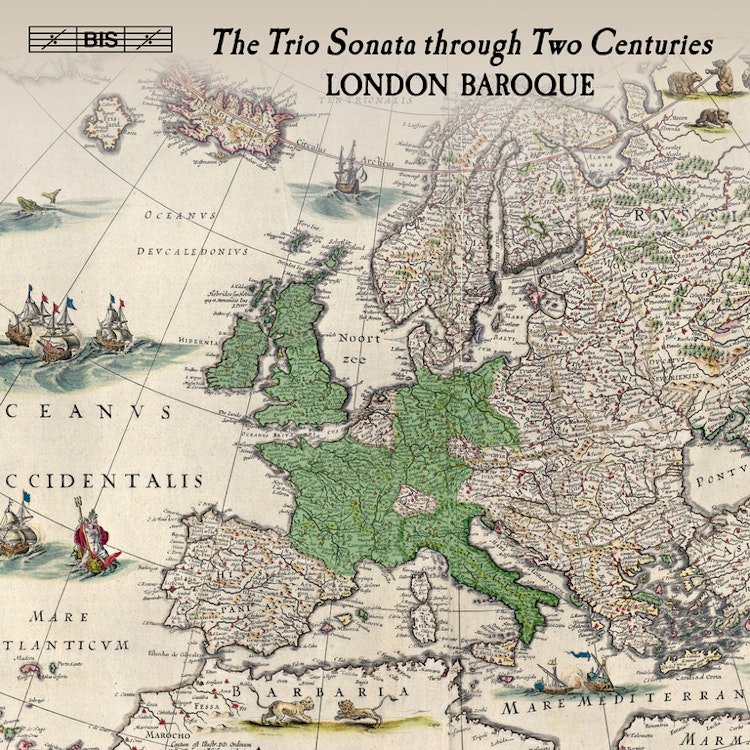
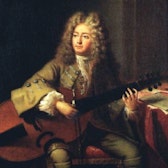
King Charles II of England, who spent his youth in exile in Versailles, famously preferred music 'he could tap his foot to' upon his return.
Performer Biography
London Baroque, formed in 1978, is one of the most experienced and long-lived baroque chamber groups, with around 90 recordings and over 2,500 performances worldwide.
Historical Context
In 17th-century England, the process of Italianization was so advanced that composer Henry Purcell declared his trio sonatas to be 'a just imitation of the most fam'd Italian Masters'.
Historical Context
In 18th-century France, the Rococo art of Watteau and Boucher mirrored the new music, where the pursuit of pleasure and beauty became a noble private aim rather than a political statement.
Compositional Technique
The trio sonata was the primary form for chamber music in the 17th and early 18th centuries, much like the string quartet in later eras.
Composition History
Around 1600, the customary addition of a figured bass part allowed middle voices of the old contrapuntal style to be omitted in chamber music, favoring the trio sonata texture.
Composer's Artistic Vision
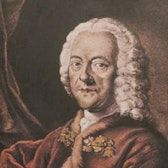
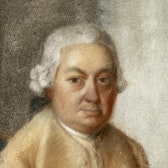
In 18th-century Germany, composers like Fasch, Graun, Telemann, and C.P.E. Bach developed a 'conversational style' that presaged the classical era.
You might also enjoy...
Bach: Trio Sonatas, Wq. 144-151
Pachelbel: Canon and Gigue / Händel: Sonata G Major Op. 5 No. 4 / Vivaldi: Sonata D Minor, RV 63, 'La Follia' / Bach: Orchestersuite Nr. 2 H Moll BWV 1067
The Trio Sonata in 18th-Century Germany
The Italian Connection: Vivaldi; Corelli; Geminiani; Lonati; Veracini; Matteis
The Trio Sonata in 18th-Century France
Händel: Music for the Royal Fireworks
Handel: Music for the Royal Fireworks & Concerti a due cori
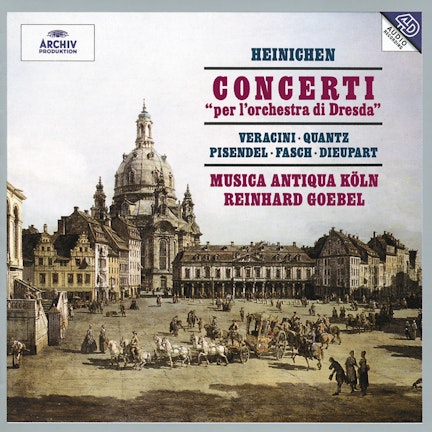
Concerti "per l'orchestra di Dresda"
Leclair: Trio Sonatas, Op. 4
Evaristo Felice Dall'Abaco: Concerti a più istrumenti, Op. 6 Nos. 3, 5 & 10 & Antonio Vivaldi: The Four Seasons, Violin Concerto in F Minor, Op. 8 No. 4, RV 297