Schulhoff was drawn to the neoclassical concerto grosso style partly due to its similarities with jazz, allowing for democratic sharing of responsibility among players and the direct incorporation of jazz elements.
Recording & Production
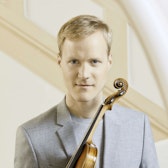
The recording features Maria Prinz (piano), Karl-Heinz Schütz (flute), Christoph Koncz (violin), and Robert Nagy (cello) with the Academy of St Martin in the Fields, conducted by Sir Neville Marriner.
Composer's Artistic Vision
Neoclassicism in the 1920s was a reaction against the emotionalism of late romanticism, aiming for simplicity, purity, clarity, and balance, often by returning to baroque and 18th-century forms.
Historical Context
The three works on this album, written in the mid-to-late 1920s, all use the concerto grosso style, which was part of a broader 'neoclassicism' movement in art, architecture, literature, and drama.
Composer Biography
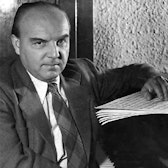
Ernst Krenek, a 'one-man compendium of twentieth-century music', experimented with jazz, neoclassicism, neo-romanticism, and twelve-tone technique before being forced to leave Austria in 1938 as a 'degenerate artist'.
Composer Biography
Erwin Schulhoff, a child prodigy pianist, had his compositional path shaped by his experiences on the Russian front during the First World War.
Recording & Production
Sir Neville Marriner, at almost ninety years old, learned three new pieces for this recording and maintained his efficiency and dedication during the strenuous recording sessions.
You might also enjoy...
From the Heartland
Milhaud: Sonata & Duo – Prokofiev: Sonata for 2 Violins – Martinů: Sonatina
Le Bal Masqué
Ledesma: Sonatas para violin y bajo
Von Tilzer: Kirvani Revisited
Tangos And Dances
Guitar Evol.3ution + Orchestra
Jeffrey Stadelman: 3 String Quartets
Arve Tellefsen Plays Ole Bull
In Tandem
Elena Ruehr: Six String Quartets
Accordion Concertos
Antares: Eclipse
The Music of Marty Regan, Vol. 1: Splash of Indigo