Mieczysław Weinberg's music, like that of Dmitri Shostakovich, often navigates the boundaries permitted by the Soviet regime, and his style is strongly colored with Jewish melodies and rhythms.
Composer's Artistic Vision
The viola is often chosen by composers to express feelings with maximum intensity and depth, especially when conveying emotions related to loss, repressive political systems, persecution, and war.
Album & Artwork
This album, titled "The Voice of the Viola in Times of Oppression," is the first of two CDs exploring compositions for viola and piano where oppression played a significant role.
Composer Biography
Max Vredenburg, a Jewish artist and composer, fled to Indonesia during WWII where he was interned in a camp, and later became a music critic and director of Youth and Music Holland.
Composer Biography
Dick Kattenburg, a highly talented Dutch composer, was picked up during a razzia in 1944 and died at age 24 in Auschwitz, leaving behind an oeuvre that shows a love for dance music and jazz.
Composer Biography
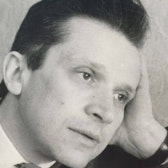
Mieczysław Weinberg, a Polish-Russian, Jewish composer, fled to the Soviet Union after the Nazi invasion of Poland and was later imprisoned, only to be released thanks to his friend Dmitri Shostakovich.
Composition History
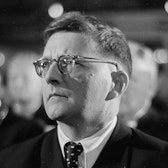
Dmitri Shostakovich's Sonata for viola and piano op. 147 was his final composition, written while he was aware of his impending death from lung cancer, making it a strongly autobiographical work.
You might also enjoy...
Benjamin Godard: Intégrale des Sonates pour violon et piano
New York Moments
Éclats romantiques
Violin Concertos for Children, Vol. 3
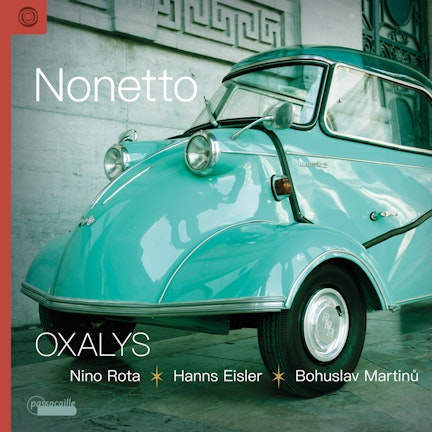
Nonetto: Works by Nino Rota, Hanns Eisler & Bohuslav Martinů
Sephardic Journey
Casella: Serenata - Pizzetti: Trio in A Major - Rota: Trio for Flute, Violin & Piano
Zilcher: Album for Accordion
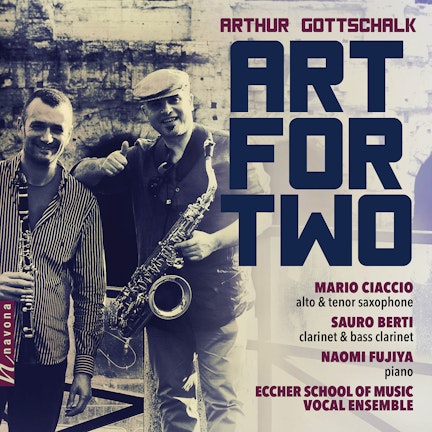
Art for Two
Pleyel: Symphonies in B-Flat Major and in G major - Flute Concerto