The Welte-Mignon system, invented in 1904, was a player piano mechanism that could record and reproduce all the subtleties of a pianist's performance using perforated paper rolls.
Historical Context
The Welte-Mignon player pianos were expensive and found in the homes of aristocracy and high society, as well as in grand hotels and ocean liners.
Recording & Production
Welte piano rolls were unique in music history for capturing a pianist's 'live' performance, saving it, and then playing it back on an instrument, unlike earlier pianola rolls.
Recording & Production
This album is not a historical recording; instead, it uses modern techniques to reproduce original 1926 interpretations with crystal clarity.
Recording & Production
The music on this album is heard on a modern Steinway piano, allowing the original interpretations to be presented without the sound quality loss typically associated with historical recordings.
Performer Biography
After a car accident in 1938 left two fingers of his left hand immobilized, Carlo Zecchi transitioned from primarily a pianist to a conductor, leading orchestras like the Concertgebouw and Vienna Philharmonic.
Performer Biography
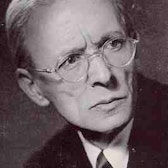
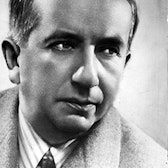
Carlo Zecchi, the pianist featured on this album, studied with both Ferruccio Busoni and Arthur Schnabel, considering Schnabel his most important teacher.
You might also enjoy...
Vladimir Horowitz - In the Hands of the Master - The Definitive Recordings
Italia
Tomono Kawamura: Reminiscence
Vladimir Ashkenazy - Steinway Legends
Piano Masters
K(NOW)n Piano
Nepomuceno: Piano Works
Nepomuceno: Piano Works
Steinway Legends: Maurizio Pollini
Piano Classics - Keyboard Masterworks by Mendelssohn, Schumann, Brahms, Mozart, Beethoven, Schubert, Chopin, Liszt