The Welte Mignon, invented in 1904 by M. Welte & Söhne, was a system that could record and authentically reproduce a pianist's performance using perforated paper strips.
Composer Biography
Theodor Leschetizky was taught by Carl Czerny, a pupil of Beethoven, leading Leschetizky to feel as though he had known Beethoven personally.
Performer Biography
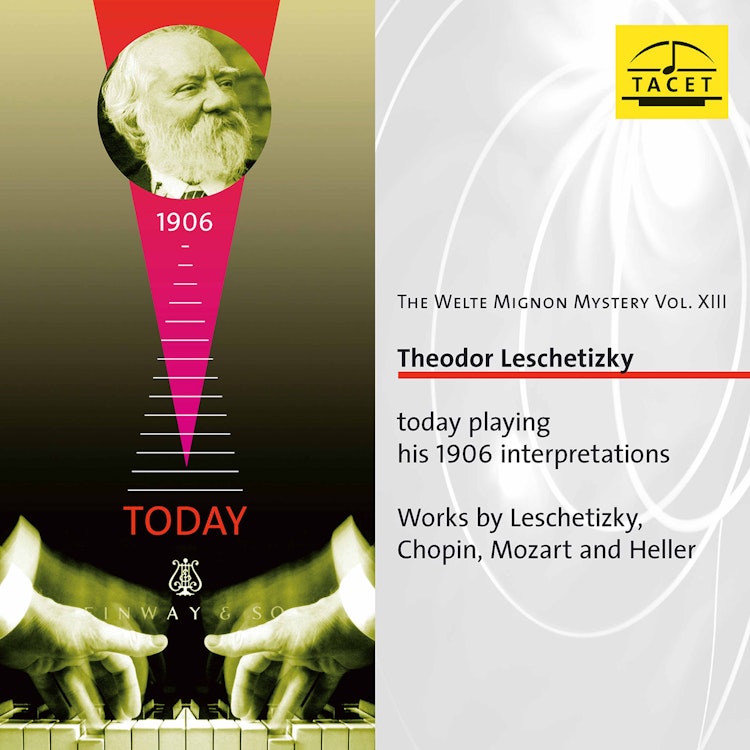
Theodor Leschetizky, the pianist featured on this album, was a highly influential piano teacher who taught over a thousand pupils, including famous pianists like Ignacy Jan Paderewski and Artur Schnabel.
Recording & Production
This album is not a historical recording; instead, it uses modern recording techniques to reproduce original interpretations from 1906 via a Welte Mignon player piano.
Compositional Technique
Theodor Leschetizky's own compositions on this album, such as 'Arabesque' or 'L'Aveu', are characterized by pianistic elegance, featuring airy leggiero playing, sparkling arpeggios, and rippling runs.
Historical Context
Welte Mignon player pianos were expensive and found in the homes of aristocracy and high society, as well as in grand hotels and ocean liners, before production ceased in 1932 due to economic depression and new recording technologies.
Interpretation
Theodor Leschetizky's playing on this recording, made when he was 75, is described as commanding and confident, even though his last official concert appearance was nearly 20 years prior.