The Welte-Mignon system, invented in 1904, was a player piano mechanism that could record and reproduce the rhythmic and dynamic nuances of a pianist's performance.
Historical Context
The Welte-Mignon system was initially hailed as a 'new wonder of the world' and found in the music salons of aristocracy, nobility, industrialists, and even on luxury steamships.
Composer's Artistic Vision
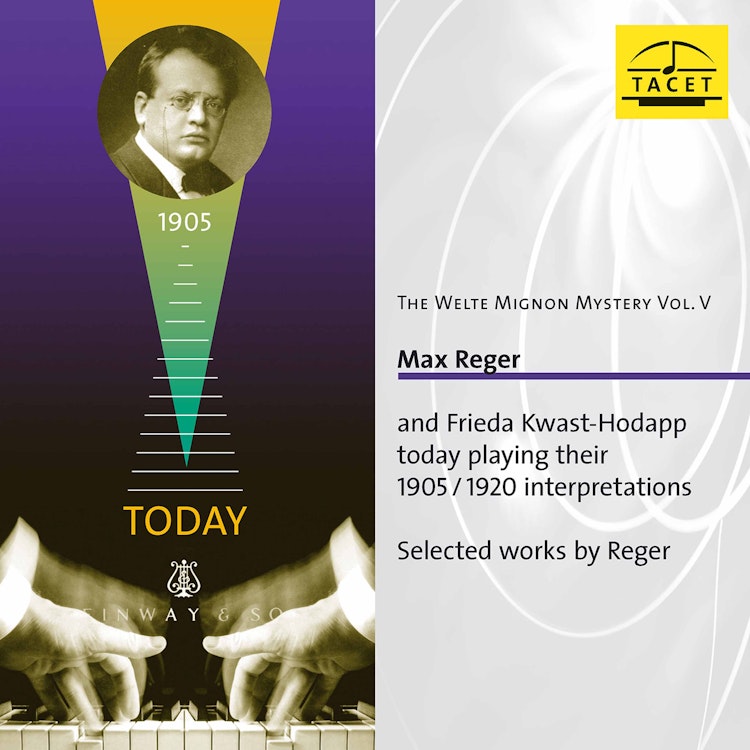
Composer Max Reger emphasized the importance of creating a 'tradition' for how his works should be played, viewing the Welte-Mignon recordings as part of this campaign.
Historical Context
The Welte-Mignon system declined in popularity due to changing entertainment tastes (like new dance styles), the international economic crisis, improved records, and radio, with production stopping in 1932.
Performer Biography
Pianist Frieda Kwast-Hodapp, who studied with Clara Schumann, was highly esteemed by Reger, who dedicated his Piano Concerto to her and the Telemann Variations to her husband.
Composer Biography
Max Reger, a composer and performer, was known for his brilliant technique and intellectual grasp of music, with his teacher Hugo Riemann considering piano as his main subject.
Recording & Production
This album is not a historical recording; instead, it uses the Welte-Mignon system to reproduce original historical performances on a modern Steinway piano.